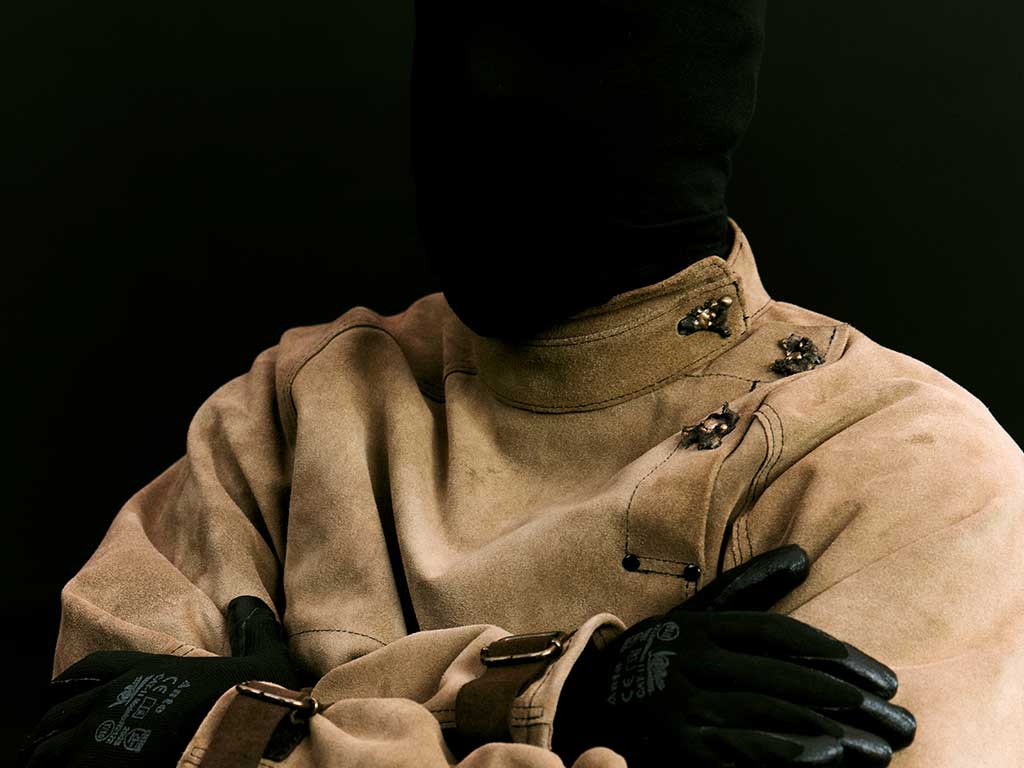
New Technologies Beyond Traditional Fashion Design – Dinis Lopes
Dinis is a student at the University of Lisbon and participated in the FashionTEX Riga Makerspace 2026. During the two intensive weeks, he worked with CLO3D and learned how to integrate technologies beyond traditional sewing—such as metalworking and CNC woodworking—into the design process. He was particularly impressed by the variety and quality of the technical equipment, as well as the openness of the international participants.
Dinis, what new skills or insights did you gain at the Makerspace?
I learned how to integrate technologies that go beyond traditional sewing into the workflow. I found metalworking and CNC woodworking particularly interesting. I realized that such technologies can significantly improve the workflow and open up new possibilities for bringing design ideas to life.
Was there a specific moment when you thought, “This is a real ‘aha’ moment”?
Yes, I had that moment when the various tools and technologies at the Makerspace were introduced to us. In my view, having access to such a wide range of high-quality technical equipment enormously expands the possibilities and can elevate the quality of students’ work to a whole new level.
Did you make new contacts with other students or universities at the Makerspace?
Yes, and that was something that pleasantly surprised me. Everyone was very open to making new connections on both a personal and professional level. This openness within the international group was a key part of the experience for me.
What was the biggest personal challenge for you while working at the Makerspace, and how did you overcome it?
My biggest challenge was completing multiple tasks and deliverables simultaneously. The support from the instructors and technicians was crucial here; their help enabled me to manage the various requirements.
What specific insights did you gain while working on your avatar or outfit?
It was particularly important for me to further develop my technical skills in CLO3D. Working on the project gave me the opportunity to use the program more intensively and deepen my knowledge of it.
Was there a moment that particularly surprised or inspired you?
I found the tour of the Riga Makerspace and Art Academy facilities particularly inspiring. Seeing the workshops, machinery, and technical capabilities available there opened up new perspectives for my own work.
Which technical tools did you work with the most, and what did you learn from the experience?
I worked most intensively with CLO3D. This allowed me to further develop my skills in digital fashion design and gain a better understanding of how digital tools can be integrated into my own design process.
Which result of your work at the Riga Makerspace are you particularly proud of?
I am especially proud of the CNC-milled wooden forms created during the Makerspace residency. To me, they perfectly demonstrate how technologies from other fields can be integrated into a fashion and design process.
How do you plan to proceed after the Makerspace?
I want to further deepen the skills I discovered and developed during the Makerspace. Those two weeks revealed many new technical possibilities that I intend to explore more intensively in the future.
Are there any ideas or projects you would like to develop further?
At the moment, it is difficult for me to think about concrete projects beyond the FashionTEX Show. My immediate focus is on further developing and completing the work currently underway for the show.
What was the greatest personal benefit you gained from your time at the Makerspace?
Dinis did not answer this specific question in the questionnaire. However, his other responses make it clear that access to new technologies, the expansion of his CLO3D skills, and interactions with the international group were key aspects of his Makerspace experience.
Photo Credits: Miks Uzans Photography