Creative freedom and new forms of expression – Dana Sushila Hoefner
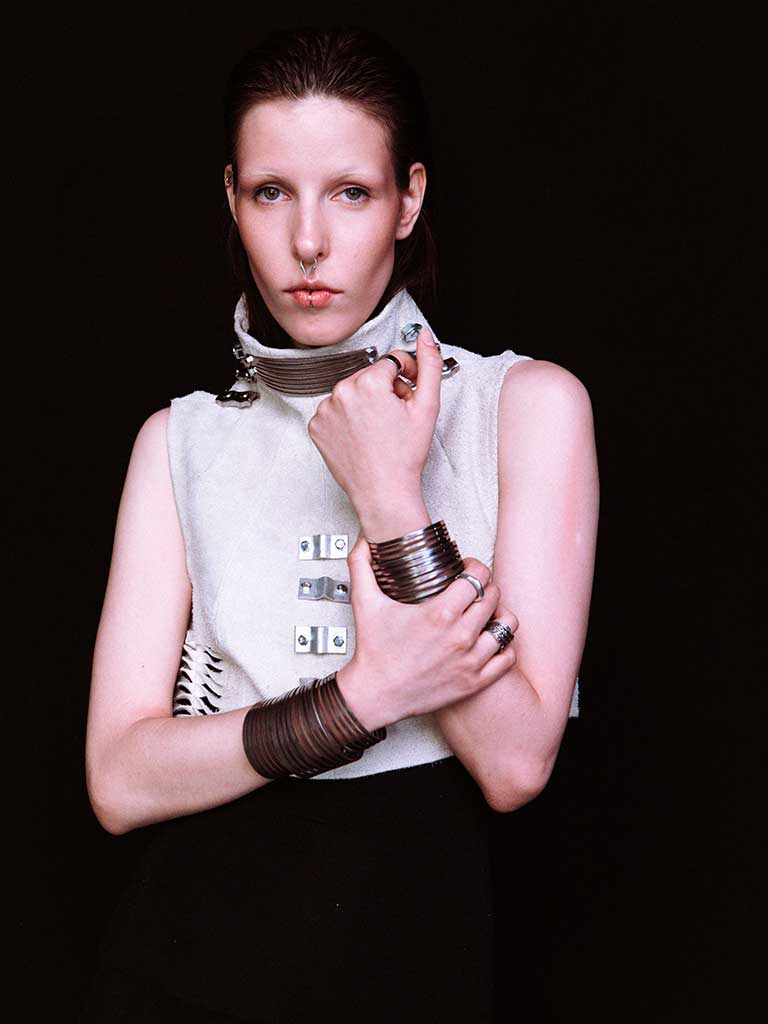
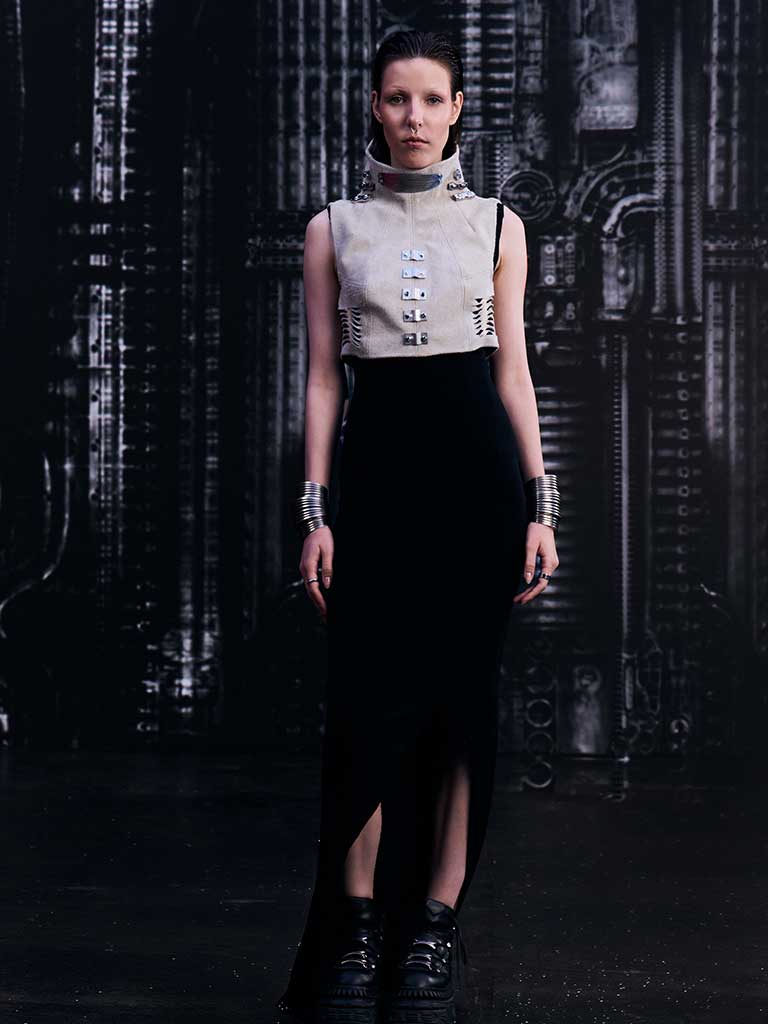
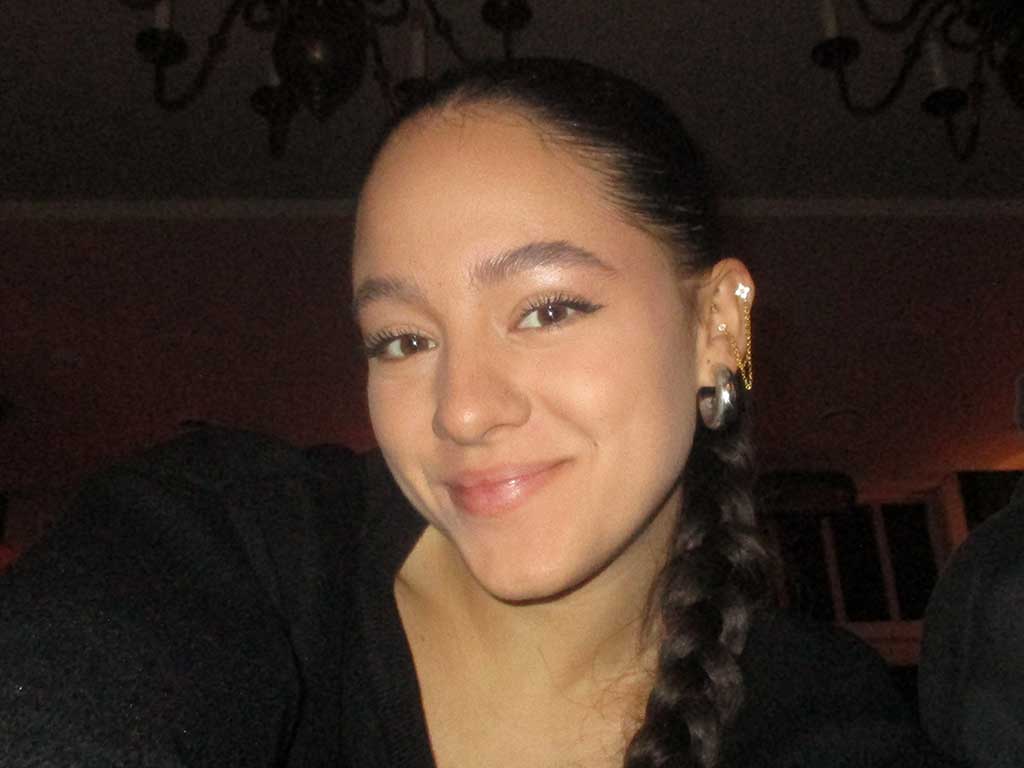
Dana Hoefner is a student at the Amsterdam Fashion Academy and participated in the FashionTEX Riga Makerspace 2026. During these two intensive weeks, she deepened her knowledge of CLO3D, worked extensively with Adobe Premiere for the first time, and discovered laser cutting for fabric and metal. Beyond technical skills, she gained a clearer understanding of her own design language. The experience encouraged her to experiment more, let go of her need for perfection, and give digital technologies a greater role in her future work.
Dana, what new skills or insights did you gain at the Makerspace?
In addition to expanding my knowledge of digital technologies—specifically CLO3D—I was able to work with new digital tools like Adobe Premiere. Through this, I learned how to translate a concept into a video. Previously, I had worked primarily with still images to convey my ideas and concepts.
Was there a specific moment when you thought, “This is a real ‘aha’ moment”?
I actually had two major “aha” moments. The first occurred while developing my creative videos, and the second while laser-cutting metal for jewelry. In both instances, I was working with a medium that was new to me and allowed myself to let go of my expectations. The real “aha” moment lay in not constantly obsessing over the outcome, but simply finding joy in the act of experimenting. Working with these new tools showed me how important it is to release the pressure I put on myself.
Did you make new connections with other students or universities at the Makerspace?
Yes. I met incredibly wonderful and talented people who made this experience truly special for me.
What was the biggest personal challenge you faced while working at the Makerspace—and how did you overcome it?
My biggest challenge was managing the wide variety of tasks and tight deadlines. It helped me to let go of the idea that my work always had to be “perfect.”
At the same time, I created a concrete plan, setting specific goals for which parts of the project I would complete on which days. This combination of structure and reduced pressure for perfection really helped me.
What key insights did you gain while working on your avatar or outfit?
Beyond the many technical skills I acquired—particularly through working with CLO3D—I also gained a better understanding of myself as a designer. I developed a clearer sense of my own visual language, the materials I want to work with, and the themes and causes I want my work to represent.
Was there a moment that particularly surprised or inspired you in a positive way?
I was probably most pleasantly surprised by the very first day at the Makerspace. I met people I hadn’t known before, yet from the start, they were incredibly open to connecting and sharing their experiences.
That openness and the atmosphere within the international group were truly special to me.
Which technical tools did you work with the most—and what did you learn in the process?
I worked most intensively with laser cutters—using both fabric and metal. In doing so, I learned how to prepare a file depending on the specific effect I wanted to achieve on a given material. At the same time, I learned that it is perfectly normal for something not to work on the first try. Experimenting and trying things out again are actually key parts of the creative process.
Which result of your work at the Riga Makerspace are you particularly proud of?
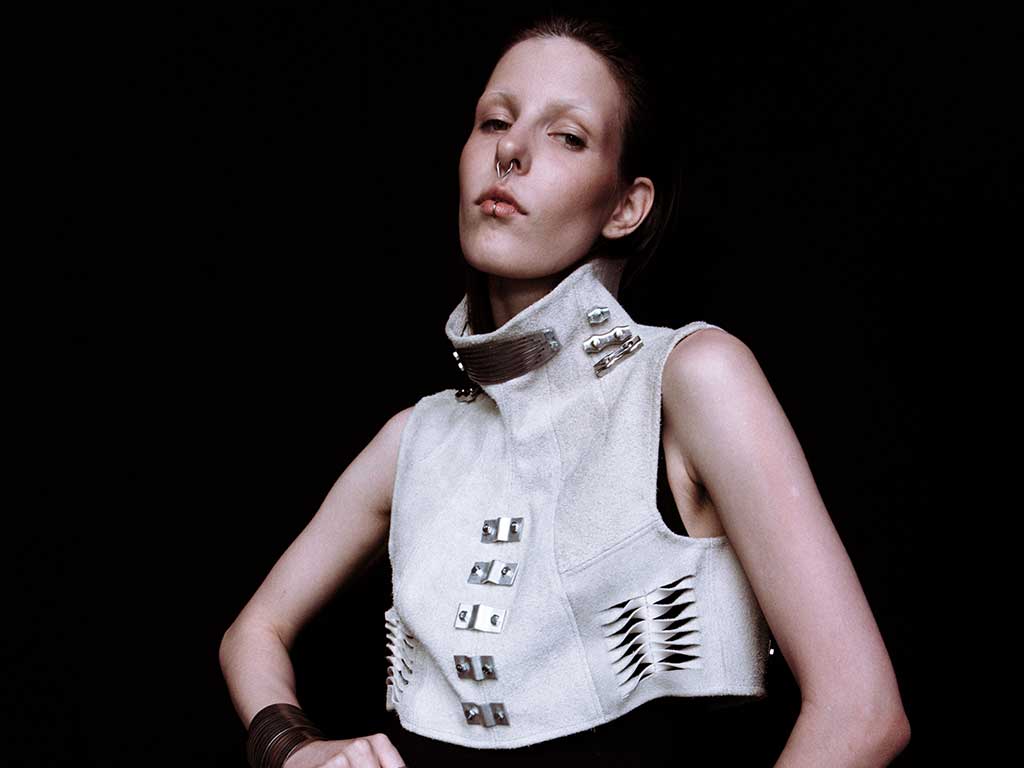
I am especially proud of the jewelry I created and my creative videos. Both outcomes represent different facets of my work: the physical engagement with materials and the digital communication of my ideas.
How do you plan to proceed after your time at the Makerspace?
I want to continue integrating digital technologies into my work. The Makerspace showed me how these tools can expand my design practice and open up new avenues for expression.
Are there any ideas or projects you would like to develop further?
I want to further develop my work with the metal laser cutter. I am particularly interested in designing more complex, detailed jewelry and using the technology for footwear in the future.
What was the greatest personal benefit you gained from your time at the Makerspace?
My greatest personal gain was a newfound confidence in my own work. This self-confidence grew primarily from allowing myself to experiment and no longer being so hard on myself.
I learned that creative development doesn’t mean everything has to work perfectly right from the start.
Photo Credits: Miks Uzans Photography