AI, CLO3D, and a new passion for knitwear design – Sophie Pöhler
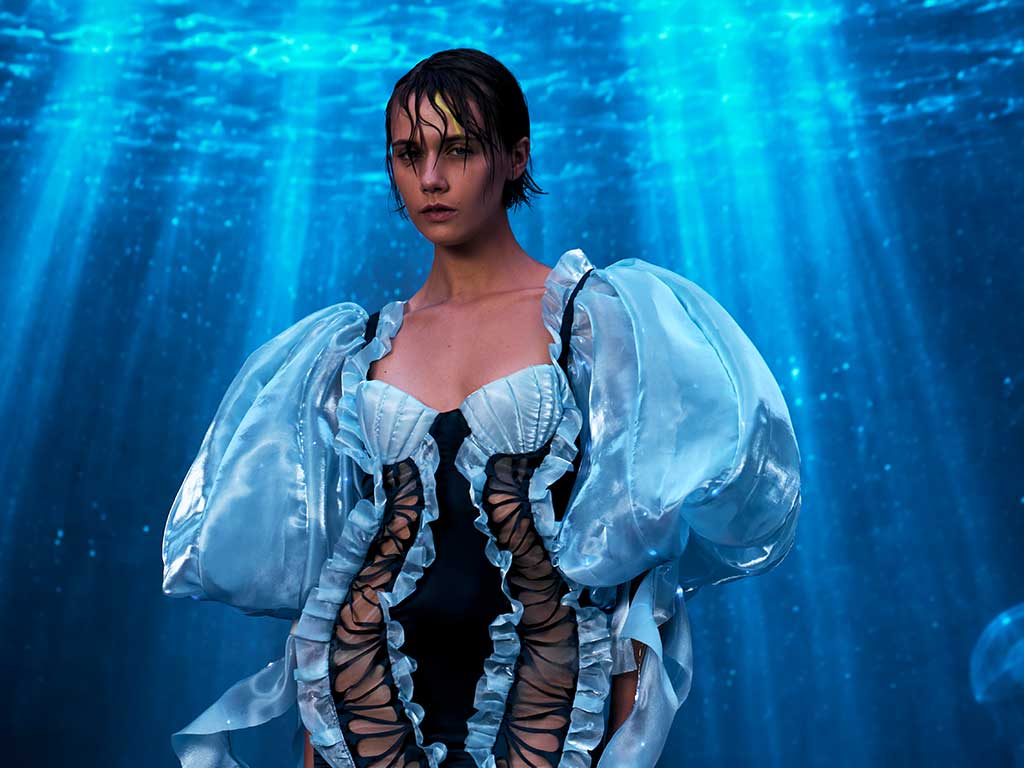
Sophie Pöhler studies at the West Saxon University of Applied Sciences Zwickau and participated in the FashionTEX Riga Makerspace 2026. During these two intensive weeks, she learned to use AI more strategically in fashion design, deepened her skills in CLO3D, and discovered new digital and manual working methods. The exchange with international students and experts, as well as the experience of motivating one another and pushing the boundaries of her own creativity, were particularly impactful for her.
Sophie, what new skills or insights did you gain at the Makerspace?
I learned to work more effectively with AI and to apply it strategically in fashion design. Through the exchange with other students, I also discovered new working methods and design processes.
However, my most important insight was just how much collaborating with other designers and experts motivated me. I realized that this allowed me to bring out more in myself and challenge myself to a greater extent.
Was there a specific moment when you thought, “This is a real ‘aha’ moment”?
Yes, when I understood how animations and AI can be used to convey the message behind an outfit or a concept. With digitally generated images or videos, you can not only showcase a design but also make the story and idea behind it visible.
Did you make new contacts with other students or universities at the Makerspace?
Yes, a great many. I made many new friends and really enjoyed spending my free time with the other fashion design students.
It was an incredible opportunity to broaden my horizons, get to know other cultures, and learn a lot about other fashion schools and countries in Europe.
What was the biggest personal challenge for you while working at the Makerspace, and how did you overcome it?
My biggest challenge was working with CLO3D, as I didn’t have much prior experience with the software. The expert tutorials—which we could watch before arriving in Riga—were therefore incredibly helpful. I took extensive notes and prepared specific questions to ask the experts on-site.
I particularly appreciated being able to decide for myself how much time to spend on a task each day. This gave me ample time to experiment and collaborate with the experts to find solutions.
What key insights did you gain while working on your avatar or outfit?
I realized that the digital rendering of an outfit is a creative process in its own right, distinct from traditional, analog production. There are limitations in the digital realm, too, and sometimes—due to time constraints, for instance—you have to make compromises.
As a result, my digital rendering evolved into a new version of my original design. I found this fascinating, as it opened up fresh perspectives on my work.
Was there a moment that particularly surprised or inspired you?
Seeing the other students’ outfits was especially inspiring. I was able to observe their workflows and techniques, and see how other young designers develop and bring their ideas to life.
Which technical tools did you work with the most, and what did you learn from the experience?
I worked with CLO3D, various AI programs, a laser cutter, Kniterate software, and a hand-operated knitting machine.
Above all, I learned that each of these programs and tools requires a significant amount of time to truly master. I had already worked with Kniterate software during my studies, but even in Riga, programming the knitting patterns took a lot of time. However, once you master these technologies, they open up almost limitless new possibilities for design. Getting to that point, though, requires patience.
Which result of your work at the Riga Makerspace are you particularly proud of?
I am especially proud of my CLO3D animations—specifically the catwalk and turntable sequences. Since CLO3D was a major challenge for me at first, it was a great feeling to see how quickly I could learn a completely new program.
Contact with the experts was also crucial. It was wonderful to receive support from people who had mastered the software whenever I ran into problems, rather than having to search for a solution on my own.
What are your plans after the Makerspace?
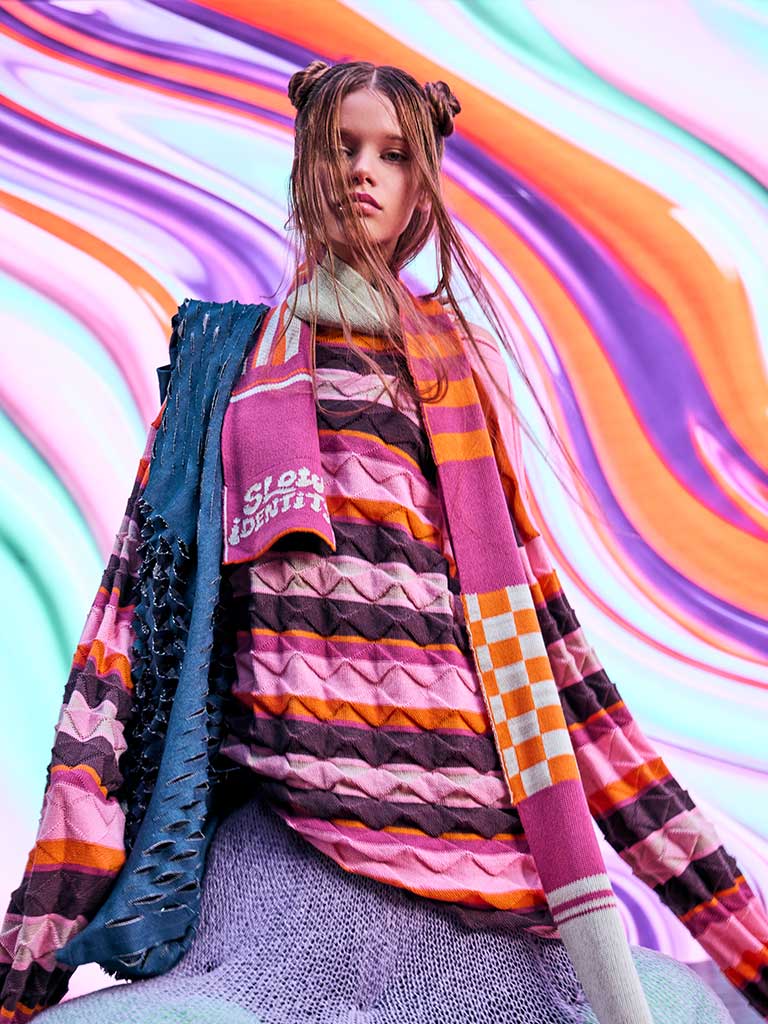
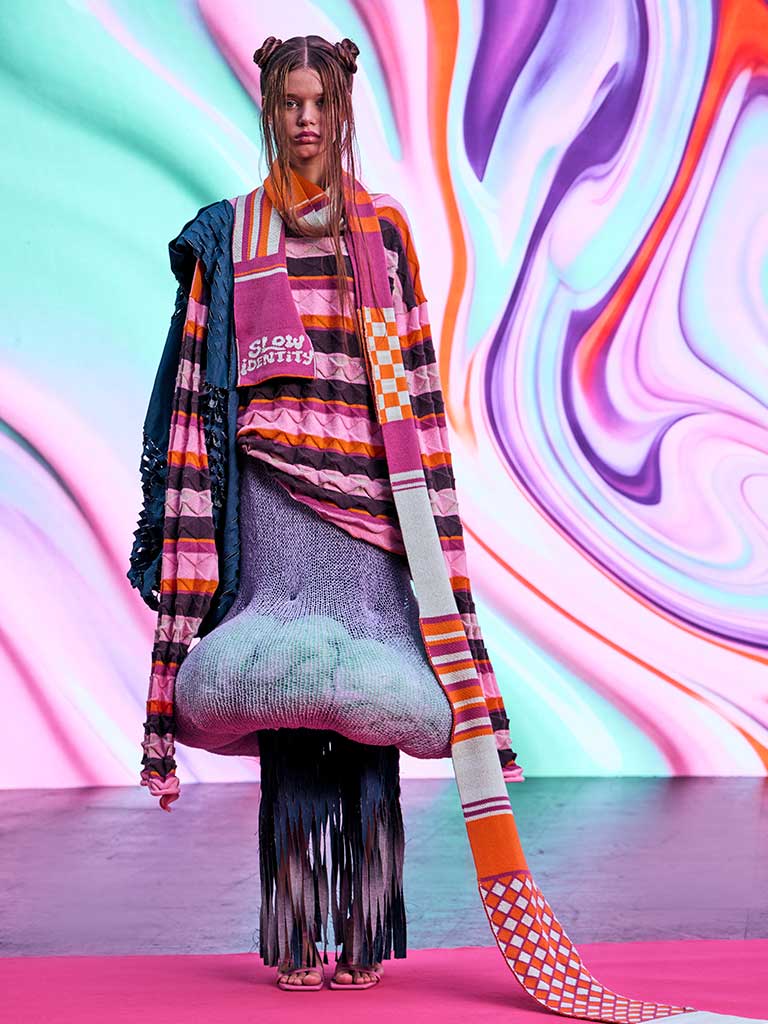
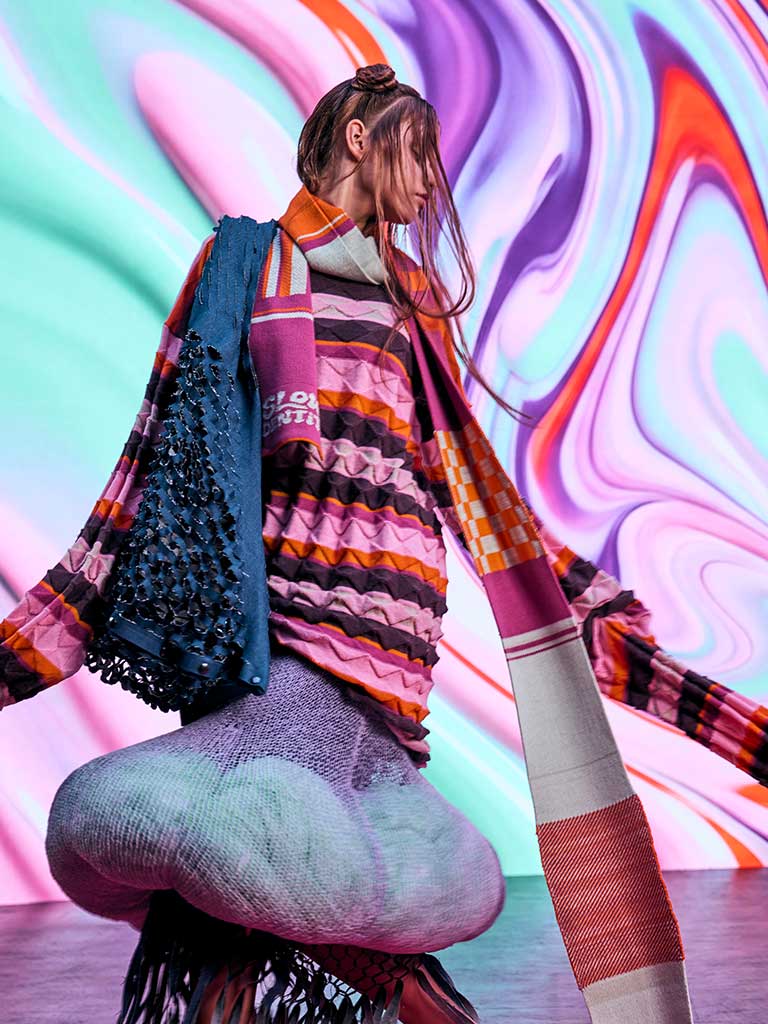
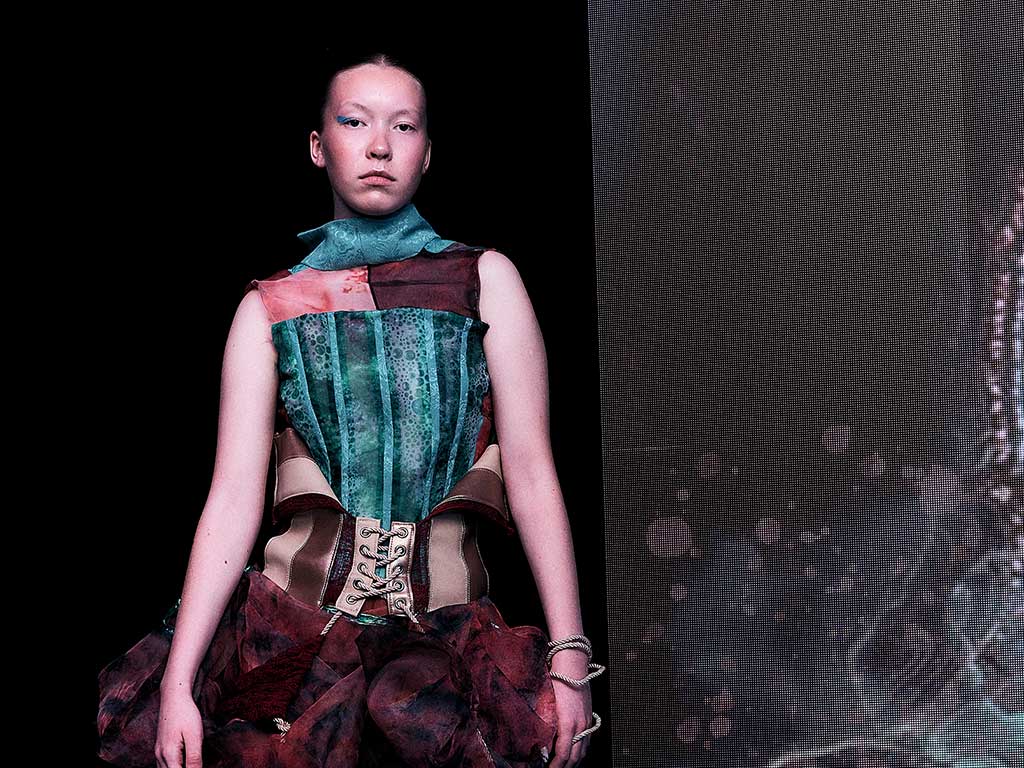
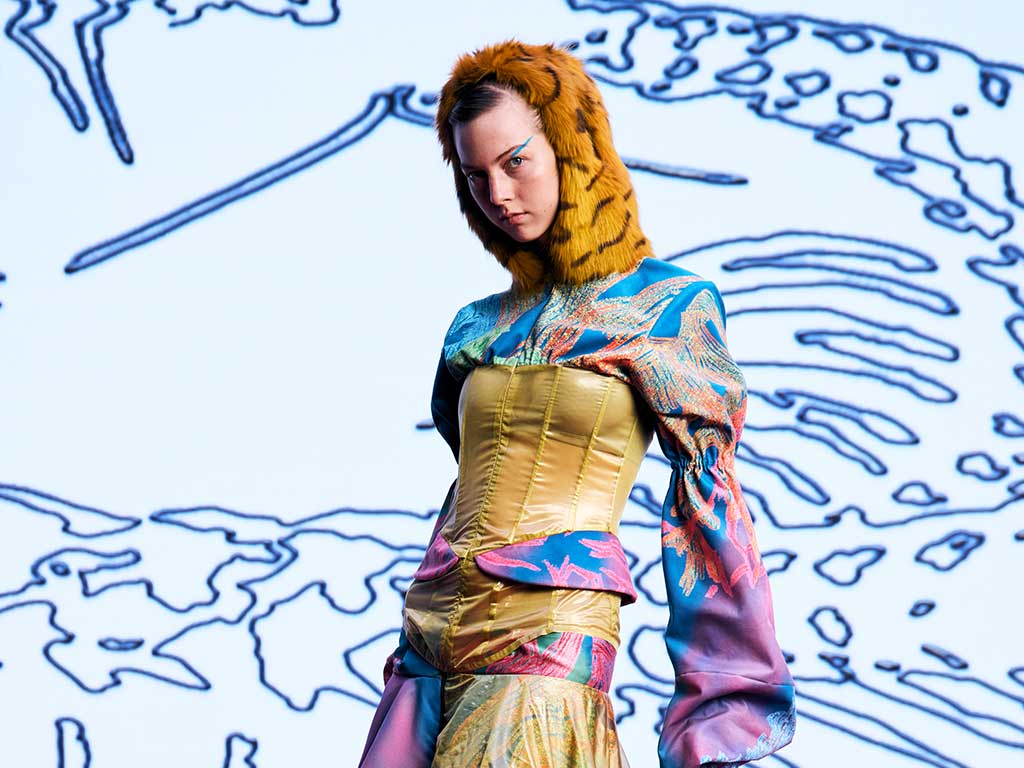
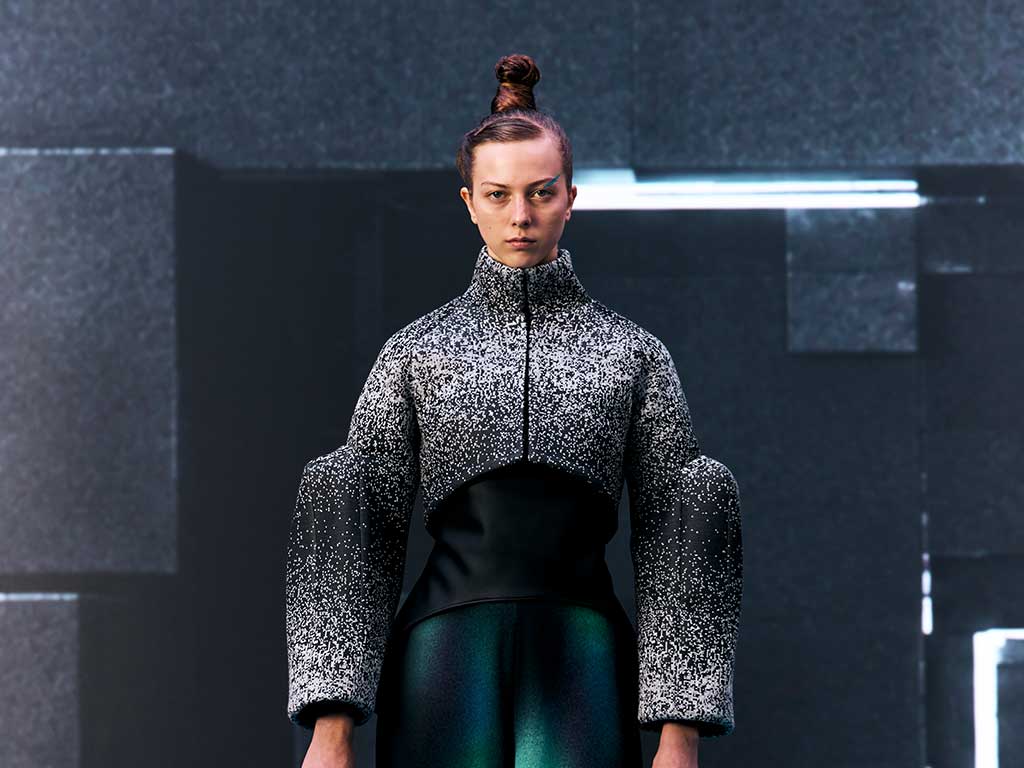
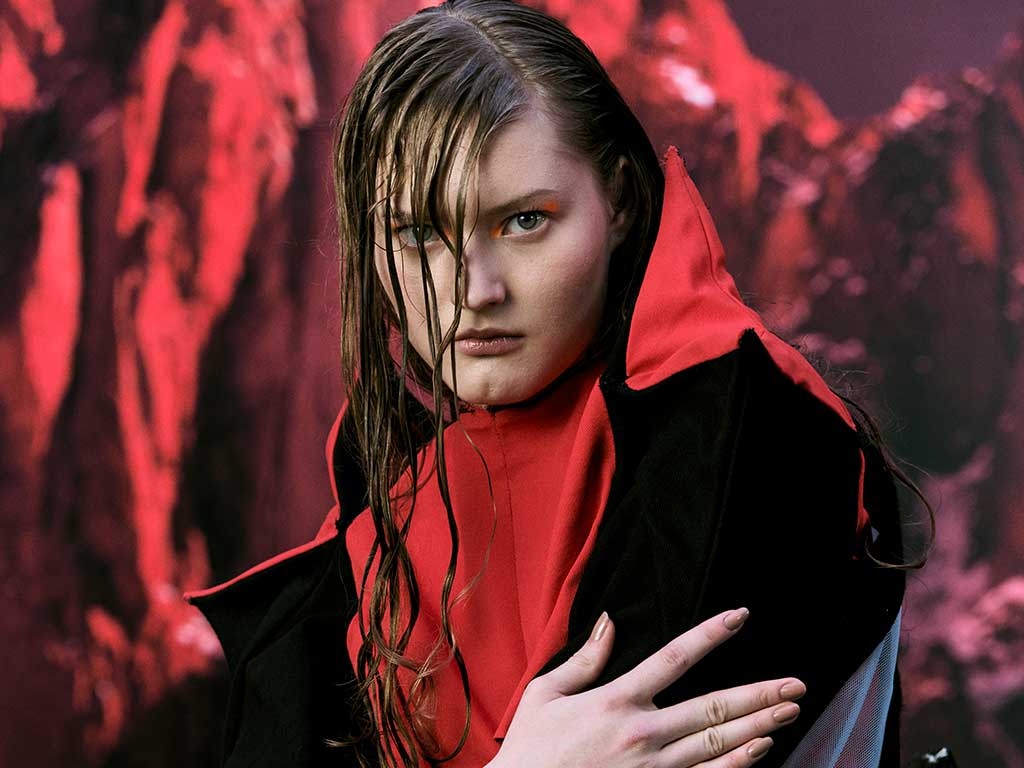
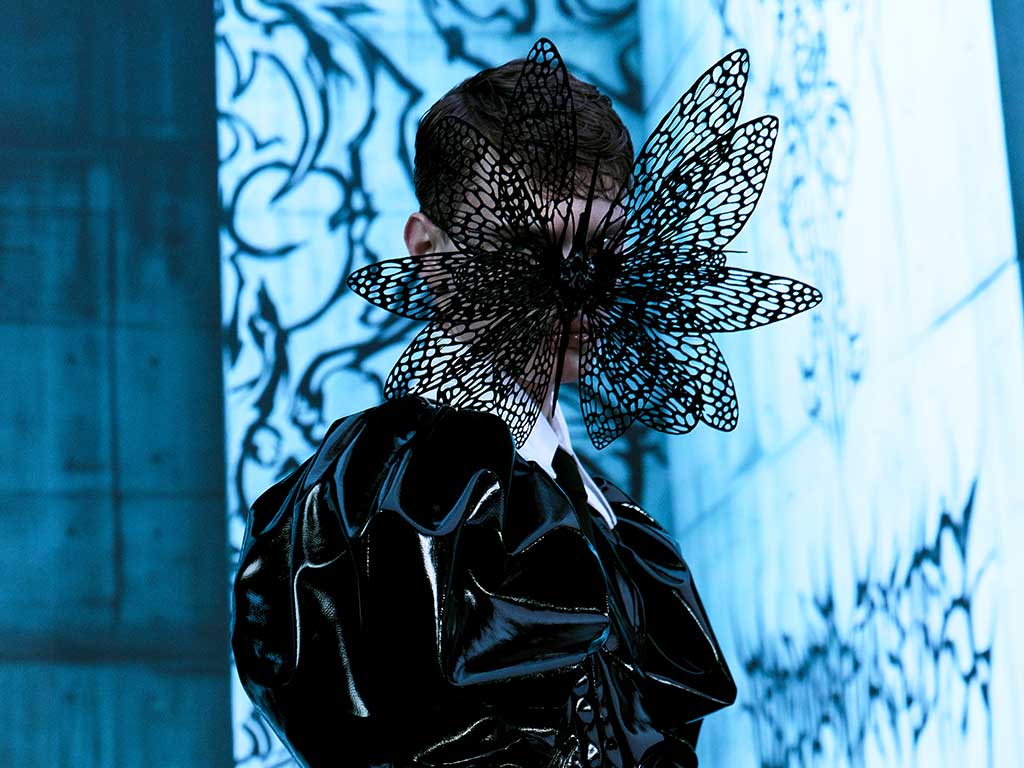
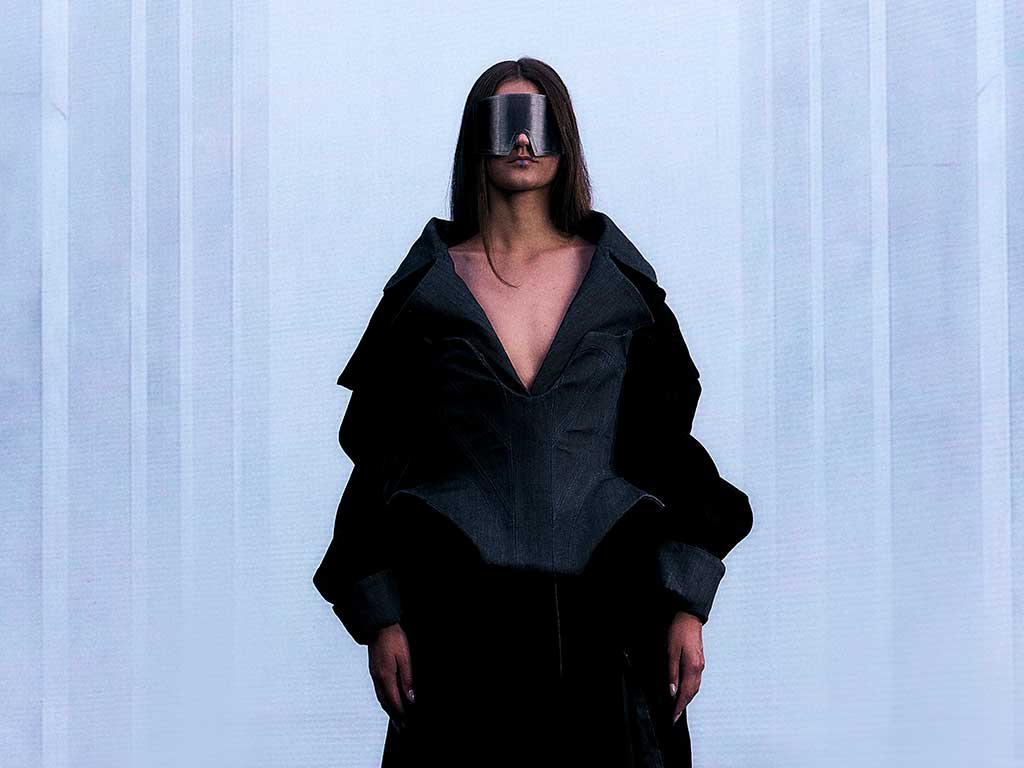
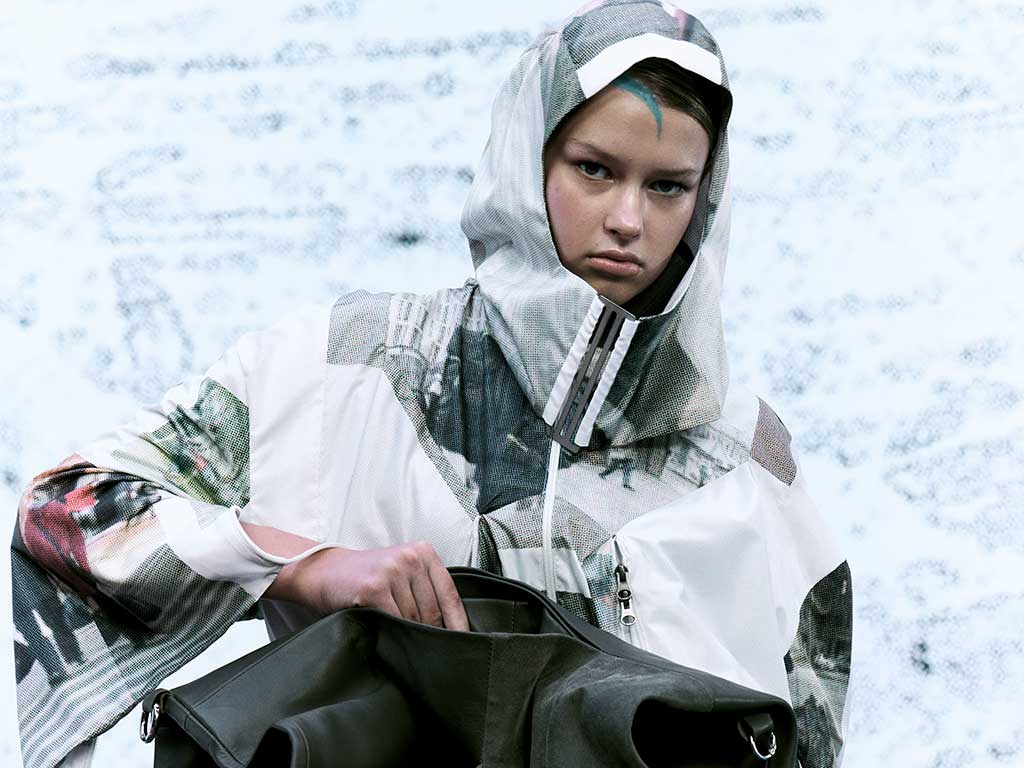
I am currently working on my bachelor’s collection and will graduate in October. My FashionTEX outfit is a more experimental version of the concept behind my collection, while also serving as an integral part of that collection.
The outfit will be featured in my bachelor’s thesis and showcased at a regional fashion show. This allows me to directly incorporate the experience I gained in Riga into my future path.
Are there any ideas or projects you would like to develop further?
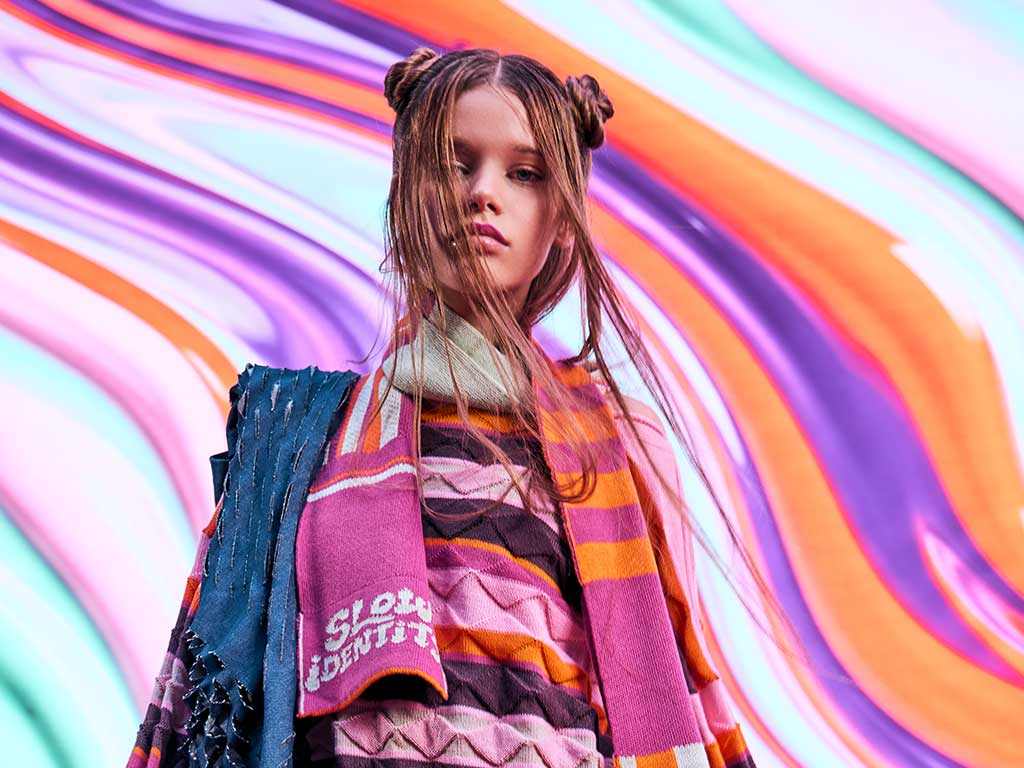
I developed a real passion for knitting during my time at the Makerspace. I found the combination of traditional hand-knitting and modern digital knitting machines—like Kniterate—particularly exciting. I even received an offer to sell the scarf I knitted in Riga at a small design shop in Germany. Perhaps I will develop more knitwear designs in the future.
What was the greatest personal benefit you gained from your time at the Makerspace?
For me, the highlight was the opportunity to meet so many wonderful, friendly people from various countries, to enjoy my time in the beautiful city of Riga, and to showcase my own designs abroad as part of an international project.
It was a special experience to let my designs speak for themselves while also growing both personally and creatively.
Looking back, Sophie describes the FashionTEX Makerspace as the best time of her studies so far—a unique opportunity for personal growth through the design process and encounters with young people from all over the world. For the future, she hopes for more international workshops and exhibitions, as well as a lasting European network that allows former participants to stay connected and paves the way for future collaborations.
Photo Credits: Miks Uzans Photography