Creating digital worlds – Han Nguyen
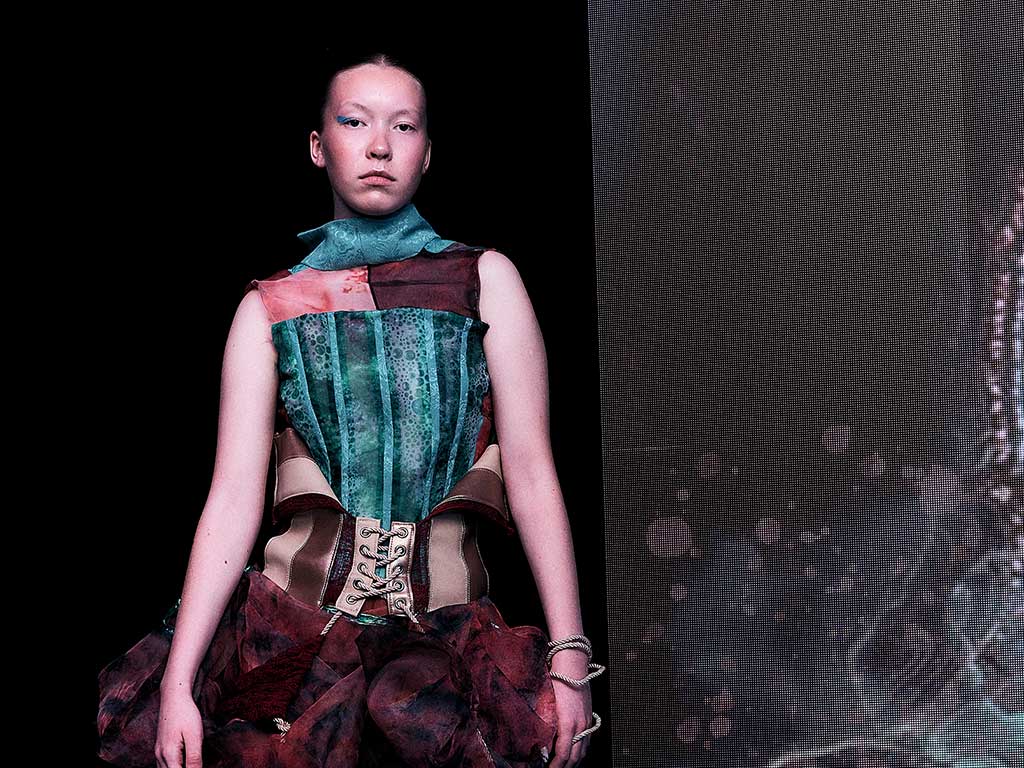
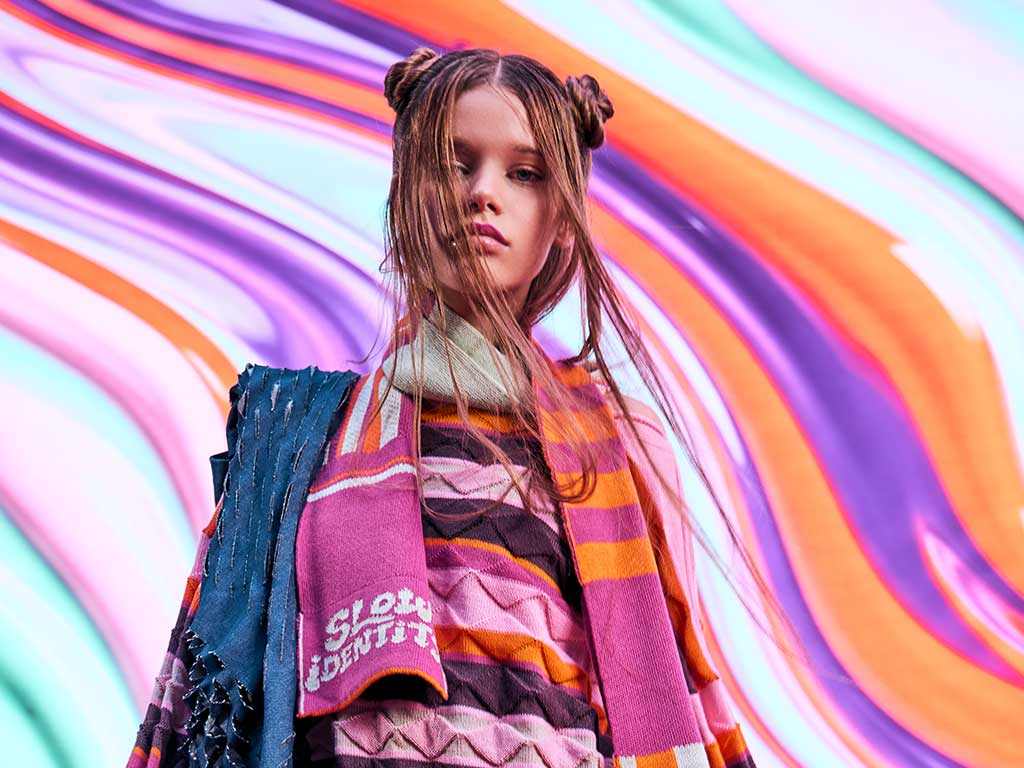
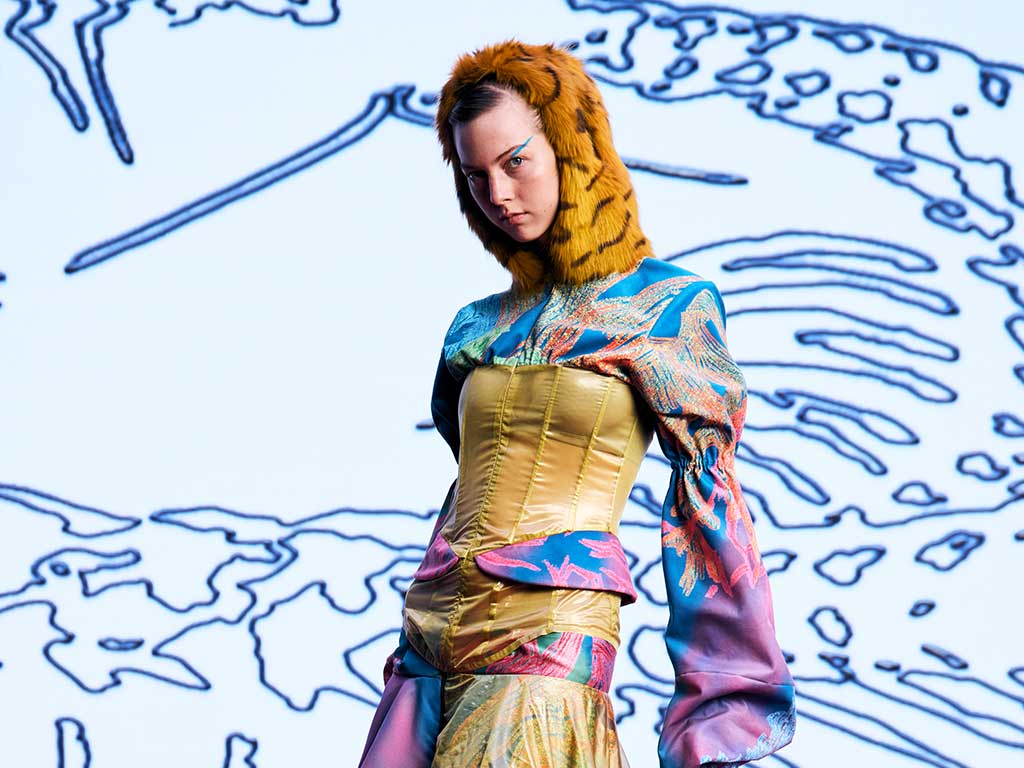
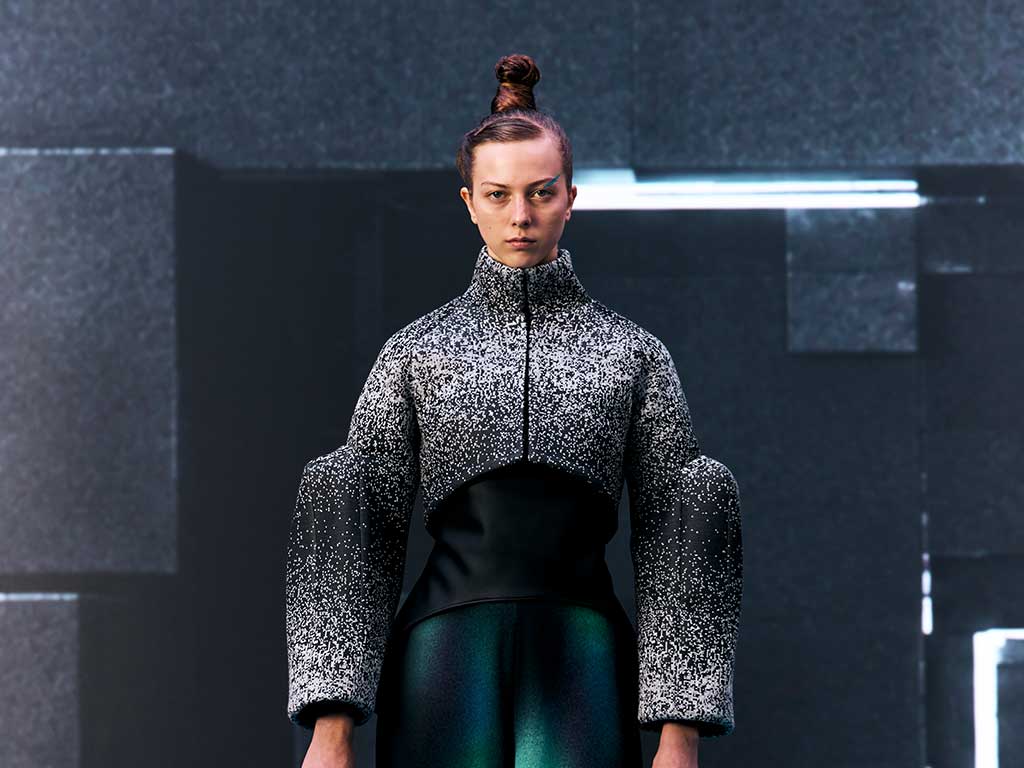
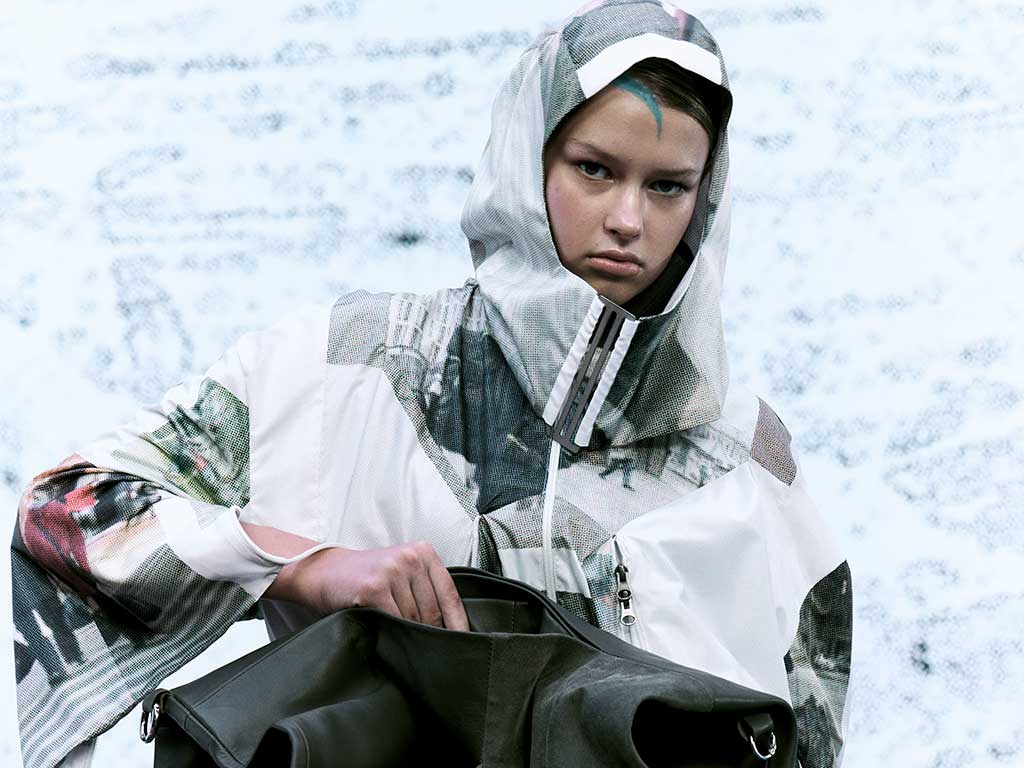
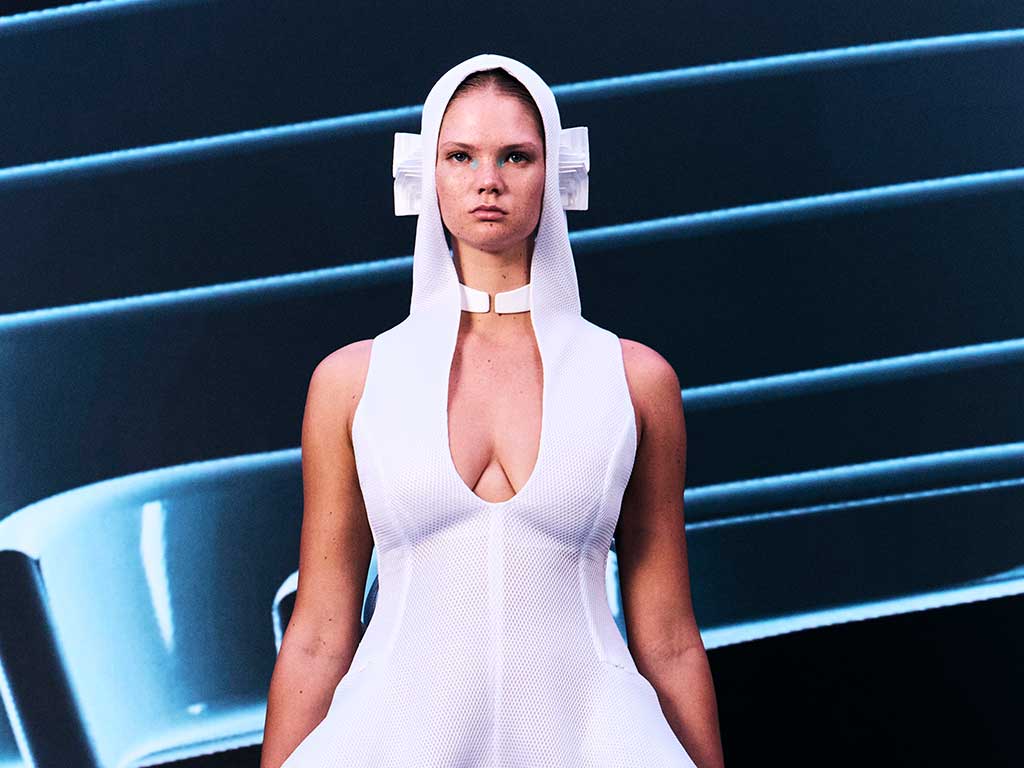
Han Nguyen studies at the Koefia Academy Rome and participated in the FashionTEX Riga Makerspace 2026. During these two intensive weeks, Han focused deeply on the intersection of physical and digital fashion—working with tools such as CLO3D, Adobe Premiere, After Effects, and Google Flow—and evolved their work into a comprehensive digital world. Key highlights included the international exchange, collaboration with experts, and the realization that a strong core idea can give rise to an entire creative universe.
Han, what new skills or insights did you gain at the Makerspace—perhaps beyond the technical aspects?
I learned about the different ways one can approach fashion. Through exchanges with students from other universities, I was able to observe how they develop their projects and take their ideas further. Those two intensive weeks showed me how a seemingly simple idea can spawn a multitude of different approaches, provided the core concept is strong.
At the same time, I learned a great deal about time management, collaboration, and mutual support. We were there not just as individuals, but also as representatives of our respective universities. To me, it felt as though each of us was a piece of a larger puzzle.
Was there a specific moment when you thought, “This is a real ‘aha’ moment”?
Yes. My “aha” moment during rapid prototyping came when I saw my CLO3D creation being transferred into a Blender file. I watched as Professor Uwe optimized the file and developed it step-by-step into the finished prototype. His explanations made the complex process understandable to me, even though I hadn’t worked with Blender before.
Did you make new contacts with other students or universities at the Makerspace?
Definitely. During those two weeks, I not only had the opportunity to talk to many other students but also to forge deeper connections with some of them. This allowed me to gain insight into their creative processes and follow the journey of their work through to completion.
To me, they aren’t just fashion students; I already view them as designers—each with unique skills, great adaptability, and an international perspective. I would also love to stay in touch with the professors and experts involved.
What was the biggest personal challenge you faced while working in the Makerspace, and how did you overcome it?
I never really viewed technical difficulties as obstacles, but rather as a natural part of the learning process. For me, the greater challenge was the emotional aspect. I had to learn how to handle stressful situations—both personally and alongside my fellow students.
I tried to respond with empathy, focus on the positive aspects of this shared experience, and maintain a positive attitude myself.
What key insights did you gain while working on your avatar and outfit?
Although I had already used CLO3D for the initial pattern making, my physical garment was finished before the digital version. This gave me the opportunity to focus intensively on the digital refinement process in the makerspace.
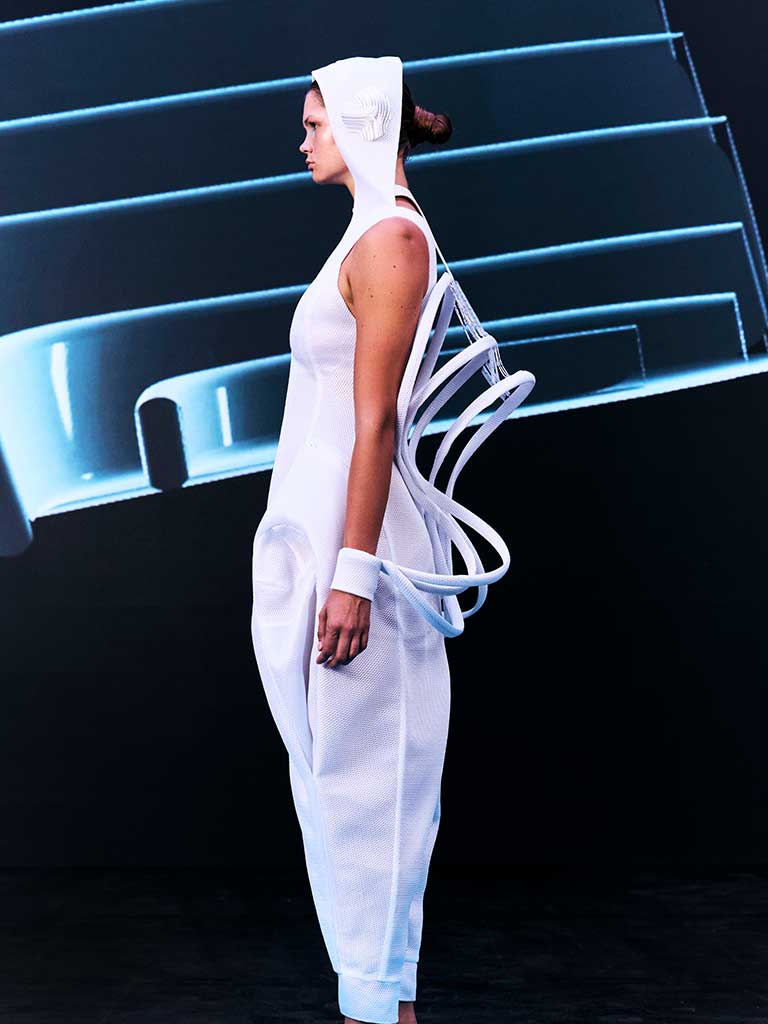
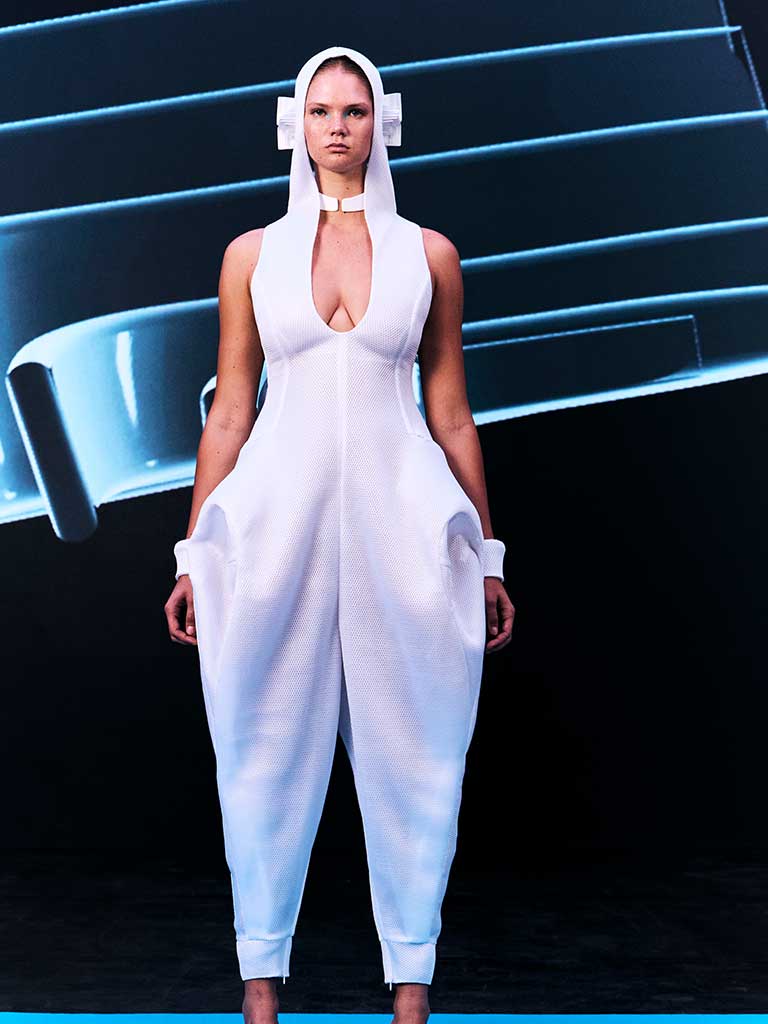
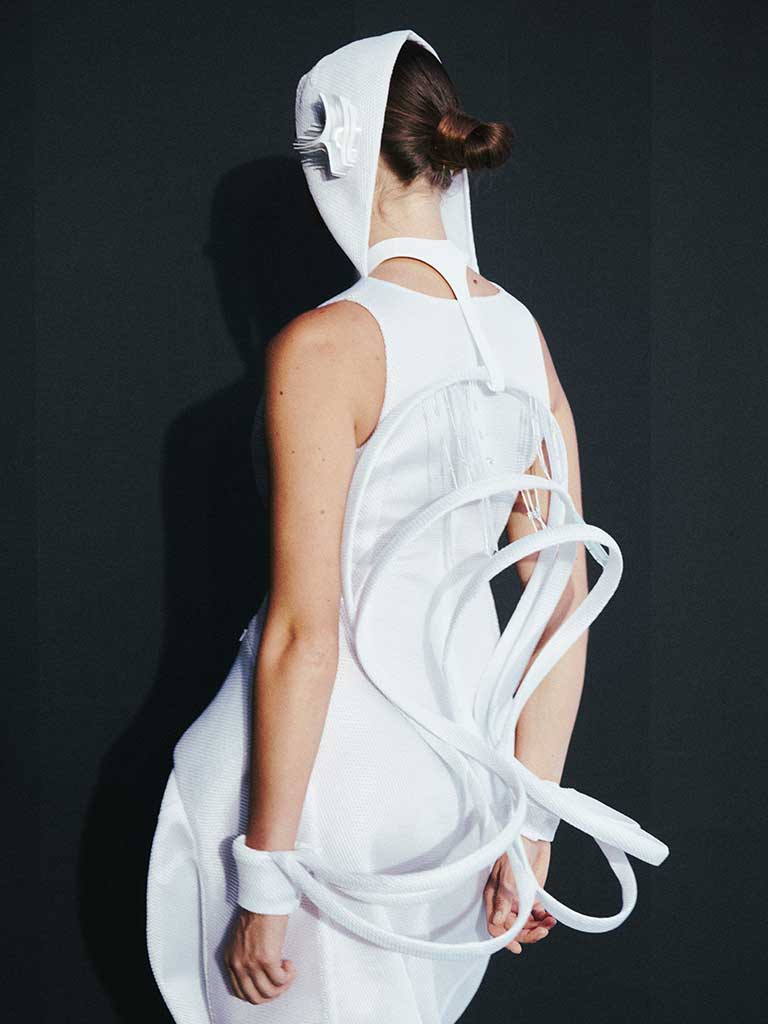
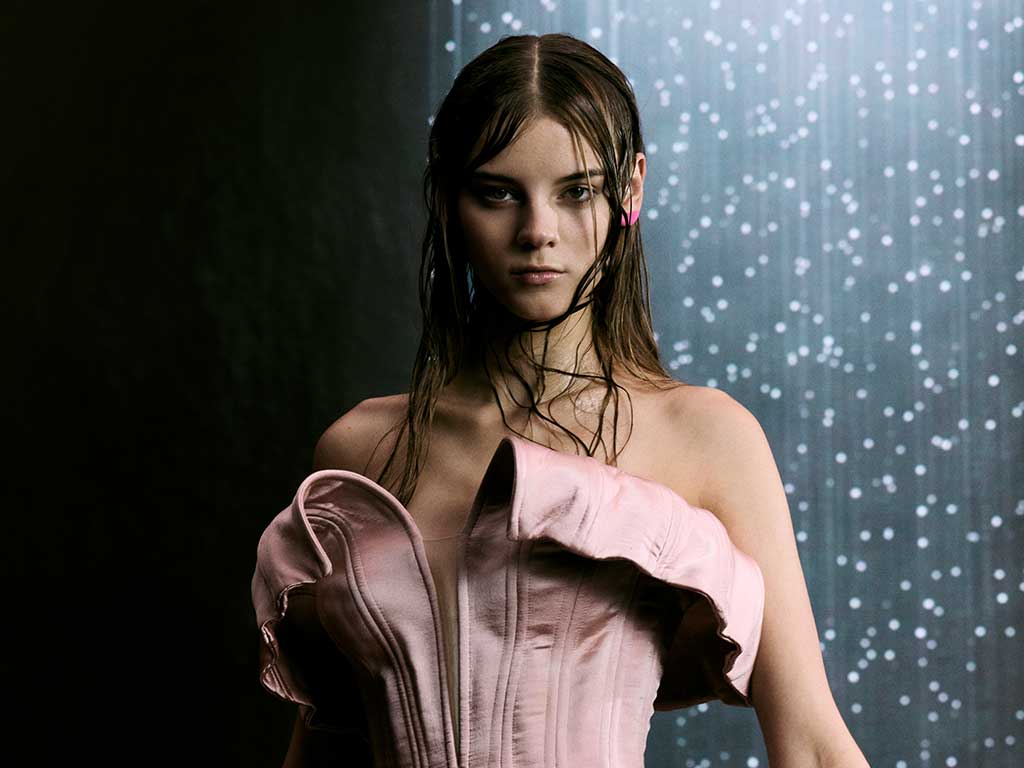
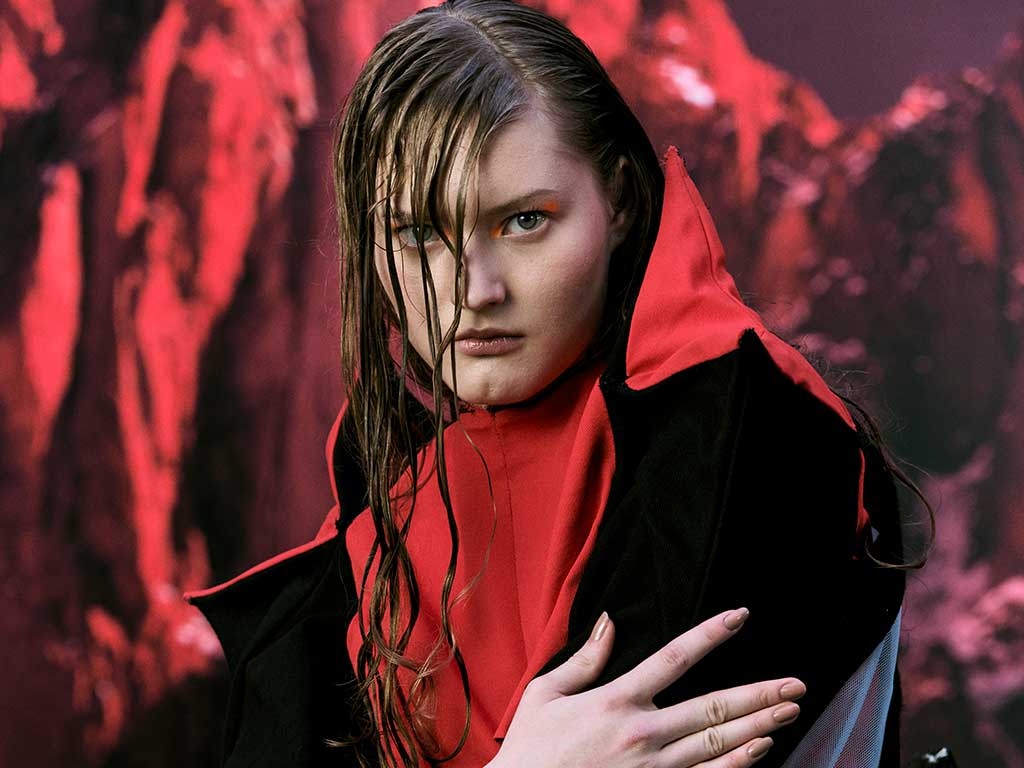
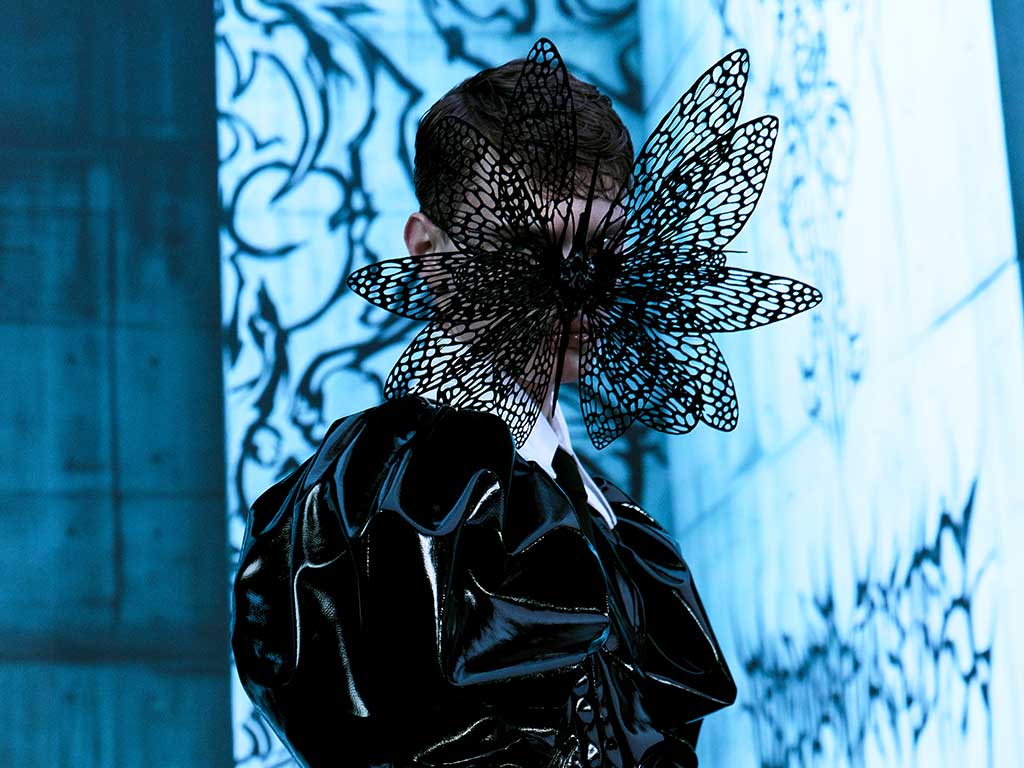
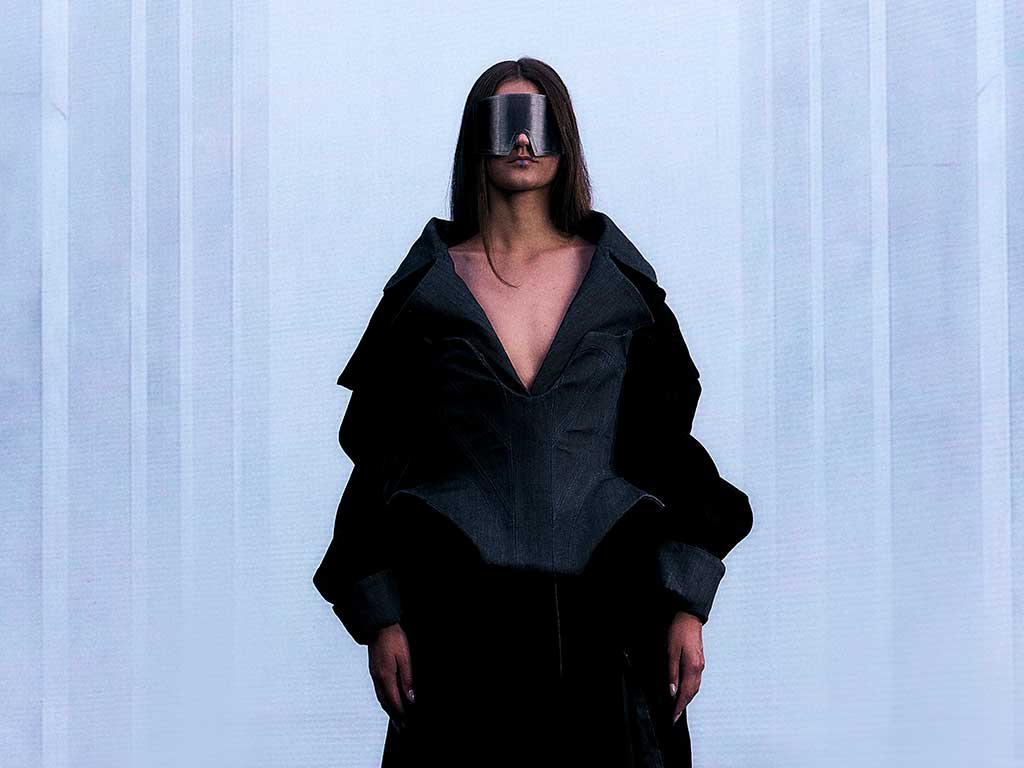
With Professor Palumbo’s support, I managed to make the digital garment look just as realistic as the physical one. By adjusting material properties, special effects, and animations, and by creating a custom-designed avatar, I ultimately built a unique world around the garment. I no longer have to explain my perspective solely through words—I can bring viewers directly into that world.
Was there a moment that particularly surprised or inspired you?
I was especially inspired when Professors Udo and Abele spoke about creating a “universe of our own” for our creative videos. That single word—”universe”—instantly sparked something in me. Suddenly, I knew exactly how I wanted to proceed.
Professor Abele later told me, in essence, that I already had all the puzzle pieces and just needed to put them together. That gave me the confidence to focus on a few strong images and my core concept, rather than constantly searching for new sources of inspiration.
Which technical tools did you use the most, and what did you learn from using them?
I primarily worked with CLO3D, Adobe Premiere, After Effects, and Google Flow. For my 3D printing project, I didn’t operate Blender myself, but I was involved in the optimization process alongside Professor Uwe and my other professors.
Working with CLO3D, in particular, helped me understand just how many steps are required to optimize a garment and avatar for a truly convincing render. The more deeply you engage with the software, the more realistic the results can become.
Which result of your work at the Makerspace are you particularly proud of?
Honestly, I’m proud of everything I achieved in Riga. Of course, the results might have been even better with more time. But the personal recognition I received from the professors and experts was especially important to me. It meant a lot that they knew my name and recognized me as someone who helps other students. I’m also proud of having maintained a positive attitude throughout the entire residency.
How do you plan to proceed after the Makerspace?
I want to apply this intensive approach to project development to my future work and continue creating my own “universes.” I want my projects to be interconnected within a cohesive digital world, thereby fostering a stronger, distinctive professional identity.
On a technical level, I want to deepen my skills in CLO3D in particular. Moving forward, I plan to use the software not just for final renderings, but to integrate it much more heavily into prototyping and pattern development.
Are there any ideas or projects you would like to develop further?
Yes, definitely. I have several ideas I’d like to develop further, especially for the FashionTEX Show. At the same time, I realize that at the Riga Makerspace, we had access to exceptional technological capabilities, equipment, and experts that aren’t available to me in the same way back home.
But the Makerspace showed me what is possible. Even if I have to adapt my workflow to the resources available to me, the immersive “universe” I started in Riga will form the foundation of my future work.
What was the greatest personal gain for you from your time at the Makerspace?
My greatest personal gain was realizing just how much I have grown and developed. As an international student at an Italian-speaking university, I often wondered over the past three years whether the language barrier was preventing me from getting the absolute most out of my studies.
That perception changed in the international environment of the Makerspace. Being able to represent my university at FashionTEX, keep pace with others, assist my fellow students, and collaborate with experts showed me just how much I had actually learned.
I came to Riga to learn something new. I am leaving with the confidence of having found my own voice in the fashion world.
Photo Credits: Miks Uzans Photography