Merging Realities: An Interview with Maciej Jabłoński on Digital Innovation in FashionTEX
How can fashion design transcend the boundaries between the physical and the virtual? Maciej Jabłoński, PhD, artist, designer, and lecturer at Lodz University of Technology, explores exactly this question in his work. With a background spanning sculpture, multimedia, and graphic design, Jabłoński brings a unique perspective to the FashionTEX Project. In the 2024/25 atelier courses, he guided students through the process of merging “hard” Blender models with “soft” fabric simulations in CLO3D, pushing the limits of digital creativity. In this interview, he reflects on the evolution of these courses, the challenges and breakthroughs, and his vision for future ateliers.
“We learn together and discover new and exciting possibilities. The interpenetration of the real and virtual worlds in this project is truly extraordinary.”
What was your goal for this semester in the studio?
My personal goal was to combine “hard” models made in Blender with the excellent possibilities of developing “soft” models made of fabrics in Clo3D.
What skills did you want to develop?
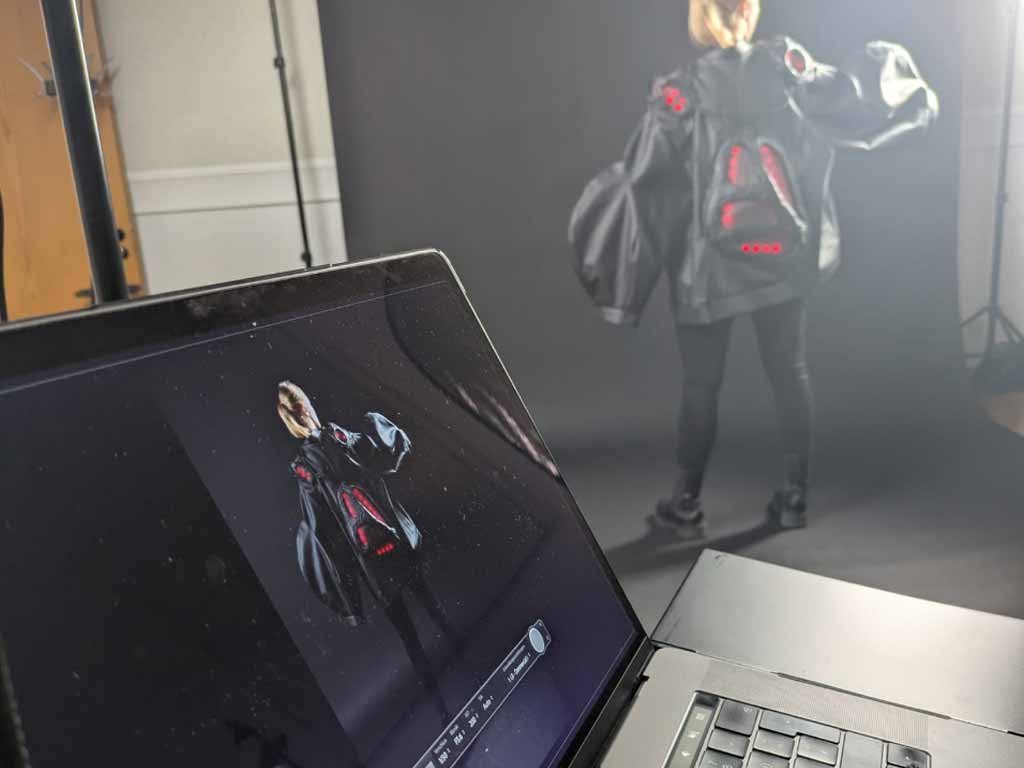
I wanted to focus on visualizing projects using AR technology, where everyone can experience the connection of the real world with virtual creation on their own phone.
How has the use of digital tools evolved compared to the previous semester?
We are constantly learning and discovering new possibilities. While in the previous semester we mainly used tutorials and carried out the tasks shown in them, now we try to transfer our own visions and our own projects to the program.
Was there a specific moment or project that stood out?
I think the most memorable were the shoes made in Blender by one of the students. They were really extraordinary and perfectly complemented the whole design of the outfit.
What would you do differently next time?
When running the next course, I would gladly invite a specialist like Antonio Lo Presti or Adele Parker to Łódź. Meeting them opened my eyes to many possibilities and would certainly show the students new creative possibilities.
What was the most difficult thing about running the course?
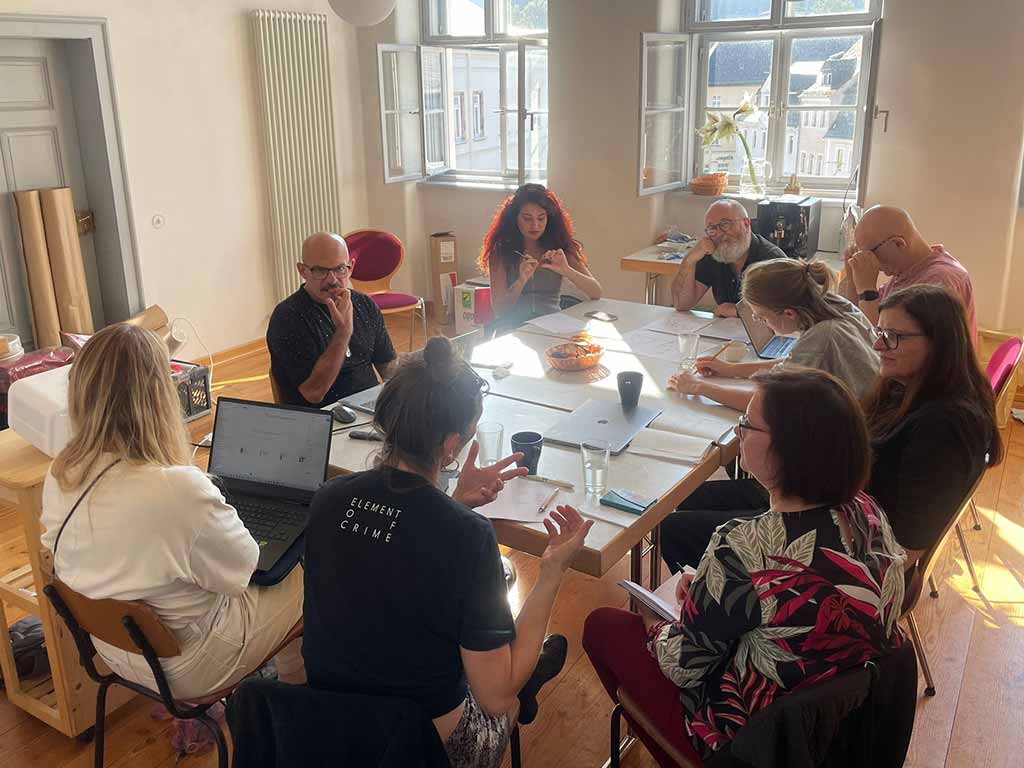
Well, the organization of classes is never easy. It was necessary to find a common time when both students and lecturers could work on projects.
How well did the transfer of theory to practice work?
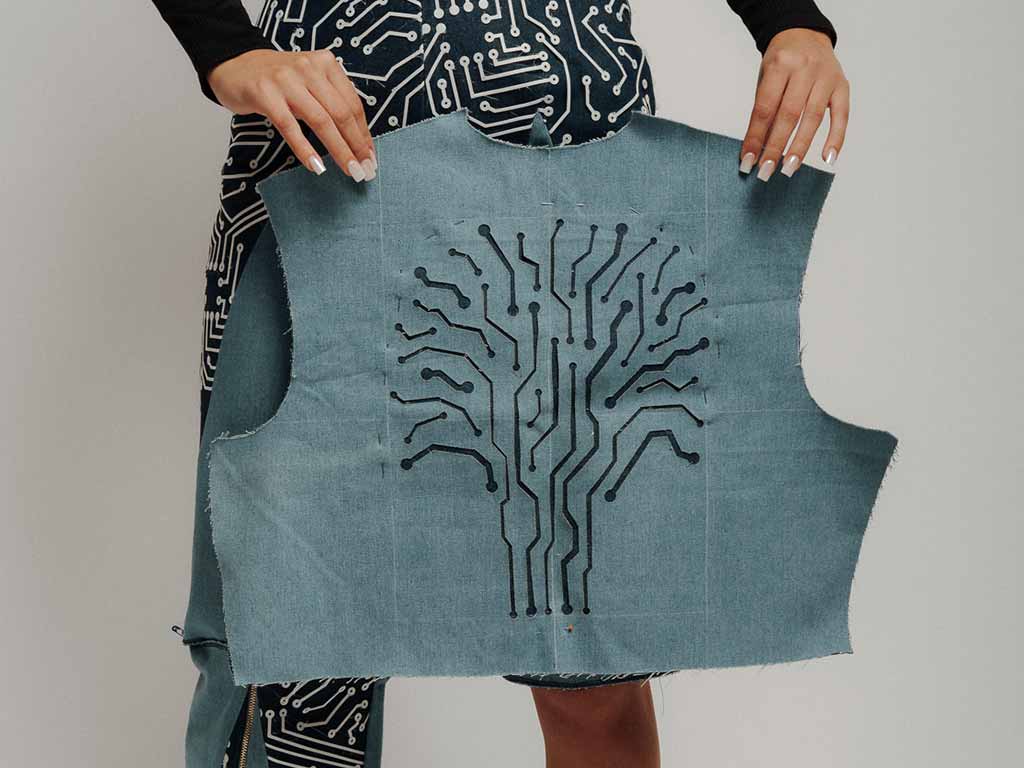
At the moment, we are at the stage of modeling in 3D programs. However, Clo creates ready-made templates for cutting, and students can sew, so the transition from the virtual world to real creations should not be a problem.
Have you observed any significant leaps in learning in your students?
There was probably no single moment that could be called an “epiphany”. The students worked with great commitment the whole time, often refining their projects after classes. They certainly learned a lot.
Was the experience gained from working on the project with the Clo program also useful in other educational activities?
Yes, of course! In the Design department, I teach various subjects related to the design of spatial forms – from sculpture to packaging design. Some first-year students of the sculpture studio, interested in studying the specialization in Clothing Architecture, were inspired by virtual fashion and created interesting works using fabrics and other textile elements. This is also thanks to the FashionTex project!
Jabłoński’s approach to teaching — balancing experimentation with technical mastery — captures the essence of FashionTEX: learning together while exploring uncharted territories in design. By blending AR technology, virtual modeling, and tangible craftsmanship, his studio paves the way for a new generation of creators to move seamlessly between the real and the virtual. As he looks to the future, with hopes of bringing international experts to Łódź and expanding collaborative possibilities, one thing is clear: the FashionTEX project is more than a course. It’s a glimpse into the future of design.