Merging Creativity and Technology: How CLO 3D Transforms Fashion Design
An Interview with Master’s Student Oliwia Ruczyńska
How can digital tools revolutionize the future of fashion? At the Faculty of Material Technologies and Textile Design at Lodz University of Technology, students are exploring exactly that. As part of the FashionTEX Project 2024/25, Master’s students dive deep into digital fashion, using advanced tools like ASSYST, CLO3D, and Blender to merge precision engineering with artistic expression.
We spoke with the master’s student to find out about her personal experience with the Atelier Courses and how it influences her work as a designer.
- What did you personally gain most from the atelier format?
I gained valuable knowledge about how to use CLO3D and how useful it can be in fashion design. Creating patterns is much easier with this tool — it saves a lot of time you’d otherwise spend on making countless physical prototypes. - Was there a specific topic or project that inspired you?
For this project, I chose Gothic architecture — especially stained glass windows — as my main inspiration. I think this style is incredibly beautiful, and it opens up amazing creative possibilities when translated into fashion. - How was it to work with digital tools – was it new or familiar?
Using CLO3D was a completely new experience for me. We had previously worked with other 3D simulation and pattern-making programs, but this one felt totally different. Fortunately, CLO3D is quite intuitive, so learning how to use it wasn’t too difficult. - What was your biggest “Aha!” moment?
Definitely when I discovered the option to modify fabric properties. It helped me a lot with refining my designs and made me realize how powerful and detailed the tool really is. - What new skills or perspectives did you develop?
I learned how to use CLO3D effectively. It was a great opportunity — one I probably wouldn’t have had if I hadn’t taken part in this program. Learning all of this on my own would have taken much more time and effort than it did with the guidance of our professor. - How was the collaboration – online or on-site?
We had on-site workshops once a week for three hours as part of the Advance Course. Whenever we needed help, we could also reach out to our professor by email. - Would you recommend the atelier format?
Yes, definitely. It’s a fantastic opportunity to develop new skills and use them to create unique and innovative designs. - What would you wish for in future FashionTEX ateliers?
I’d love to see online CLO3D workshops for all participants, led by someone with more experience, who could show us more advanced tools and techniques.
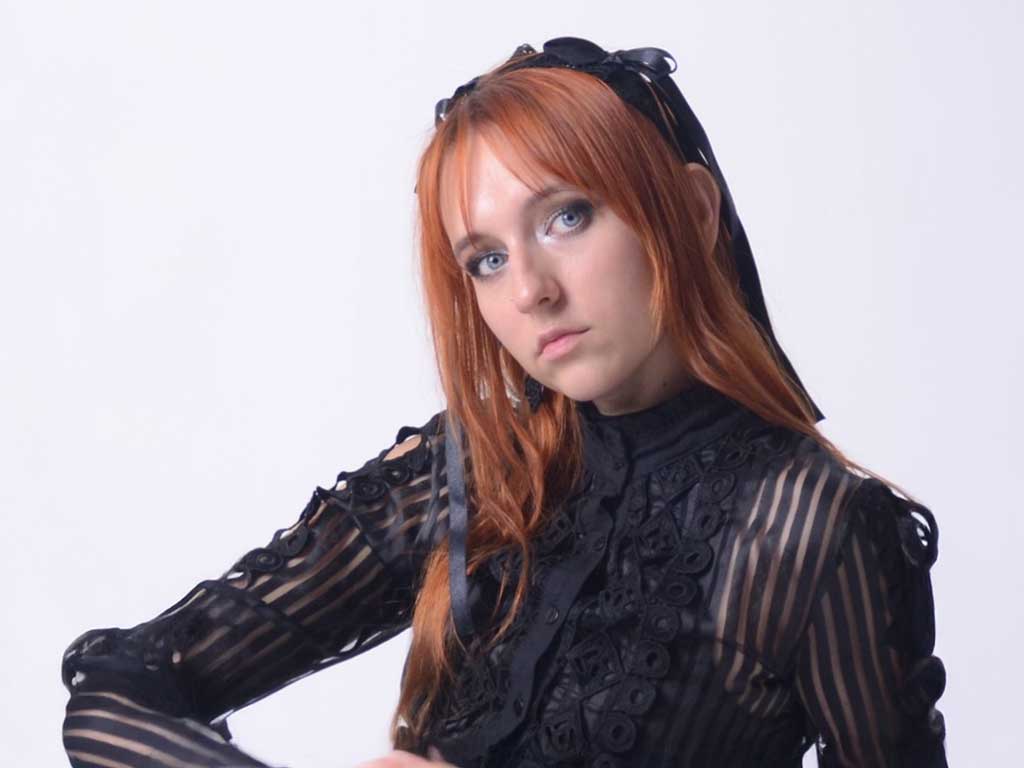
“I want to show the monumentalism, mysticism, and beauty of cathedrals in my designs.”
Oliwia Ruczyńska, Lodz University of Technology, 2025