From digital design to metal structure – Giulia Camolese
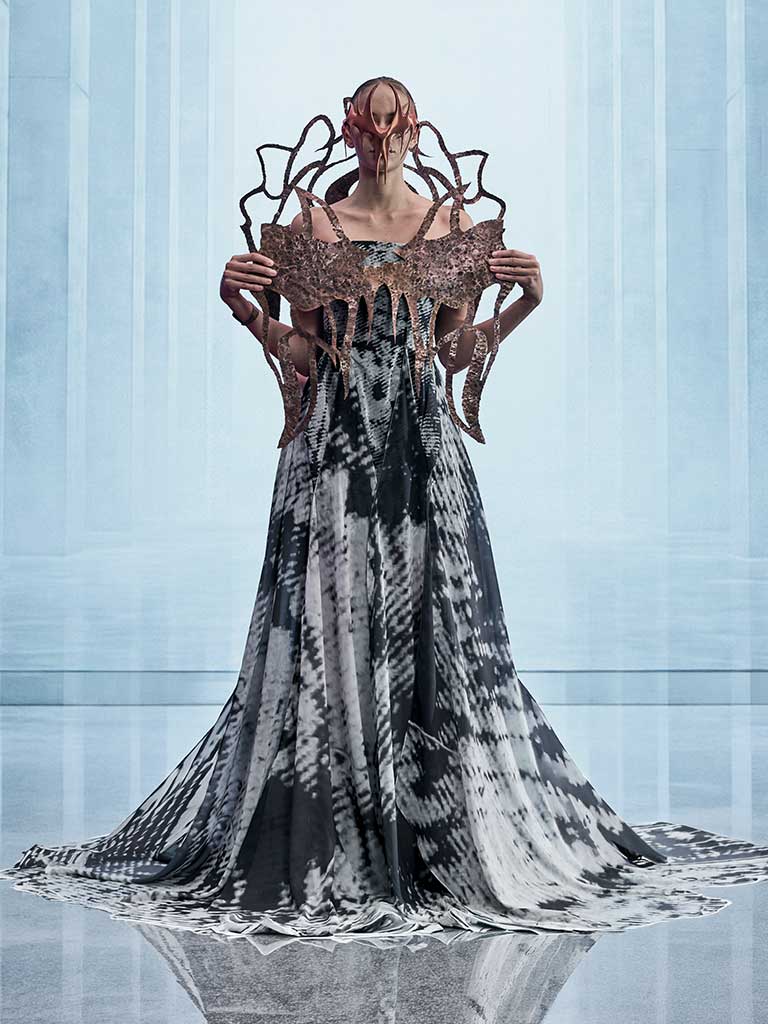
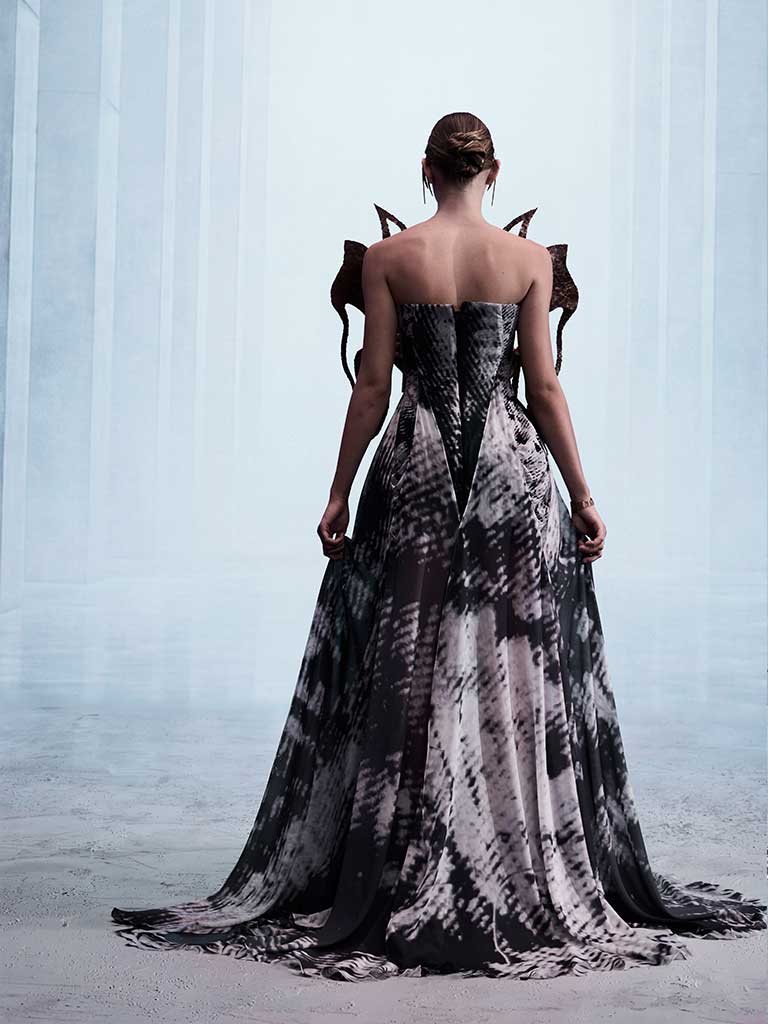
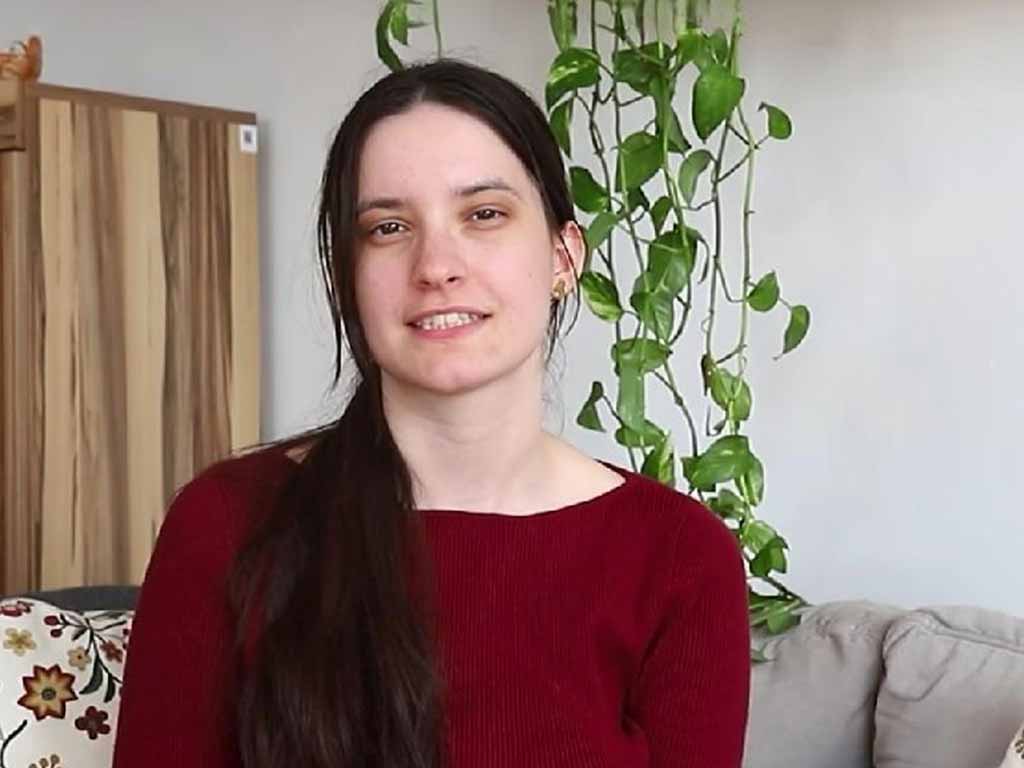
Giulia Camolese studies at the Amsterdam Fashion Academy and participated in the FashionTEX Riga Makerspace 2026. During the two intensive weeks, she worked with metal, 3D printing, and digital programs such as CLO3D and Nomad Sculpt, while also deepening her knowledge of precise garment construction. She found it particularly exciting to transform her digital design into a physical object step by step and to get to know technologies that she wouldn’t normally have access to at her own university.
Giulia, what new skills or insights did you gain at the Makerspace?
Giulia Camolese: I learned a great deal about metalworking, precise garment construction, CLO3D, and 3D printing, as well as about materials and various manufacturing processes.
For instance, I initially thought I could laser-cut copper. I then learned that this wasn’t possible and discovered a different technology instead: CNC cutting. At the same time, it was interesting to see how differently the various universities operate and how we were able to support each other during the Makerspace at different stages of our projects.
Was there a specific moment when you thought, “This is a real ‘aha’ moment”?
Giulia Camolese: Not necessarily a single moment. But I really enjoyed my time at the Makerspace and realized in retrospect just how much I learned and took away from collaborating with the various experts.
Did you make new contacts with other students or universities at the Makerspace?
Giulia Camolese: Yes, with almost everyone. It was a challenging yet fantastic experience to connect with other creatives, learn about different techniques, and—above all—meet so many wonderful people. What was the biggest personal challenge for you while working in the makerspace, and how did you overcome it?
Giulia Camolese: My biggest challenge was getting everything finished on time. On the one hand, progress on the physical garment was slow because I wanted to use the metal workshop and 3D printing facilities—technologies I don’t normally have access to in Amsterdam. At the same time, I had to create three videos about my project.
I had invested too much time in the first video and eventually had to accept that I couldn’t deliver everything at the level of quality I had originally envisioned. In doing so, I learned something important: sometimes you have to accept that a small part of a project isn’t perfect. Others still see how much work went into the project as a whole—and they might even like something you aren’t yet fully satisfied with yourself.
What specific insights did you gain while working on your avatar or outfit?
Giulia Camolese: Above all, I’m taking away a special outfit that incorporates new technologies. It surprised me to see how my design—originally created digitally—eventually transformed into a physical garment.
Was there a moment that particularly surprised or inspired you?
Giulia Camolese: I can’t recall one specific moment. But overall, the Makerspace was a very inspiring experience for me. The wide range of technologies, people, and creative approaches opened up new perspectives for me.
Which technical tools did you work with the most—and what did you learn from using them?
Giulia Camolese: I worked primarily with Nomad Sculpt and CLO3D. I also tried to get a better grasp of Blender, although I haven’t quite mastered it yet.
Another key area was 3D printing. Through that, I gained a better understanding of how the relevant software works and how digital files need to be prepared for physical production.
Which result of your work at the Riga Makerspace are you particularly proud of?
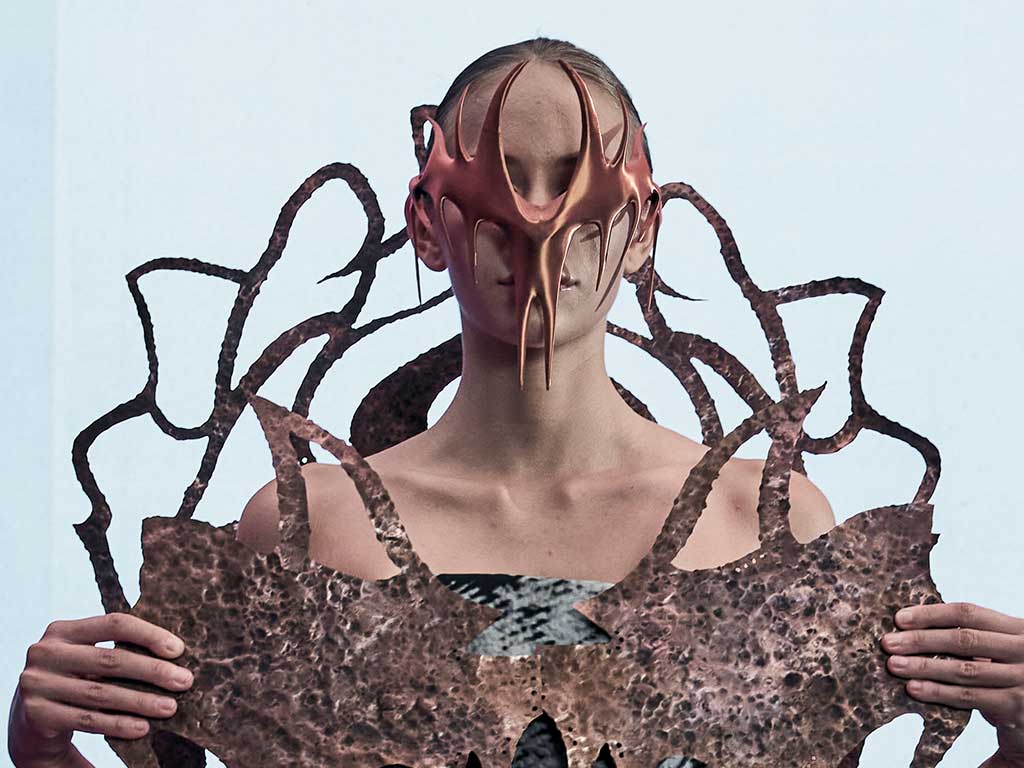
Giulia Camolese: I am especially proud of my metal structure. I’m very happy with the design, the texture, and—above all—the final form it took in reality. It was particularly exciting for me to witness how a digital idea evolved into a real-world object.
How do you plan to proceed after the Makerspace?
Giulia Camolese: I want to integrate more of these technologies into my new projects in the future. The Makerspace showed me just how much digital and technical tools can expand my creative possibilities.
Are there any ideas or projects you would like to develop further?
Giulia Camolese: Above all, I want to explore the new technologies I encountered during the Makerspace in greater depth. I’ve gained an initial insight and now want to figure out how to better integrate these possibilities into my future work.
What was the greatest personal benefit you gained from your time at the Makerspace?
Giulia Camolese: My greatest personal gain was managing to complete everything within the available timeframe. Given the many simultaneous tasks and the variety of technologies involved, it was a significant experience for me—showing me just how much I can achieve, even under time pressure.
Photo Credits: Miks Uzans Photography