Craftsmanship meets technology in fashion | Fusing digital and physical worlds in fashion and textile design
In recent years, the fashion industry has become under heavy criticism. We are increasingly aware of how our consumption impacts the environment and people, leading us to search for new paths and innovative solutions. At the same time digitalisation is advancing rapidly across all fields of society, including fashion design. It can improve processes, reduce waste and increase traceability. Additionally 3D garment construction and cloth simulation open an endless playground for creation without the constraints of gravity or material limitations.
Through these developments, digital fashion has emerged as a sector leveraging technology to transform the traditional fashion industry and has become a field of its own extending into the virtual realm. Digital Fashion enables novel methods of creation and alters the required skills, challenging long established norms within the industry.
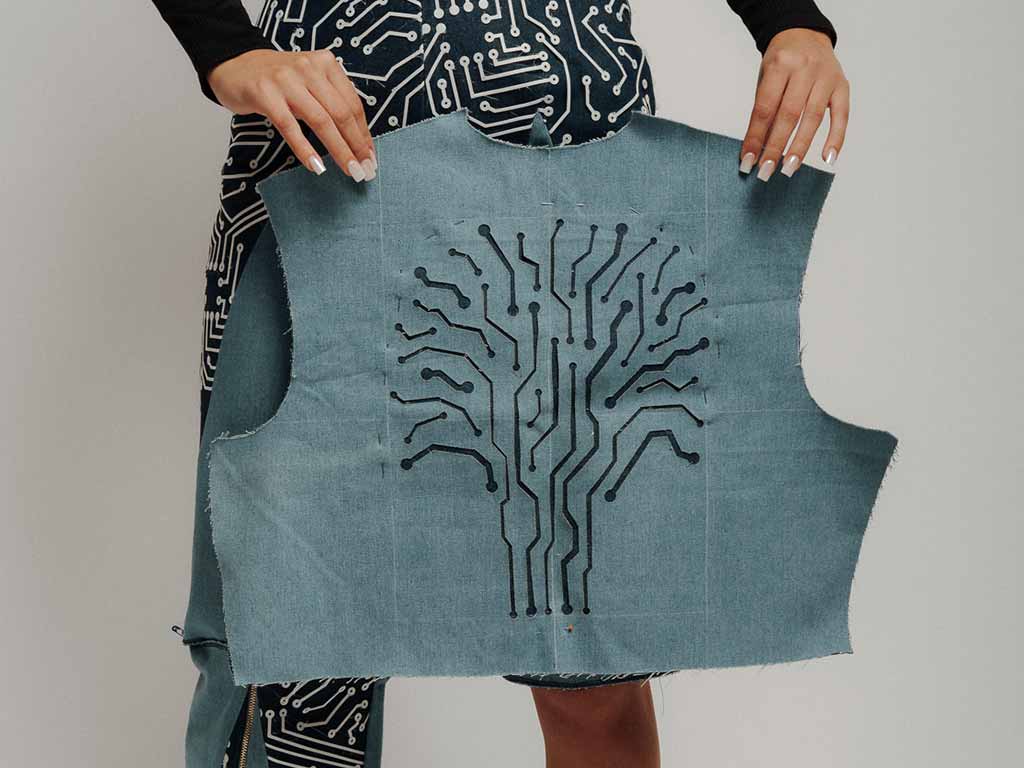
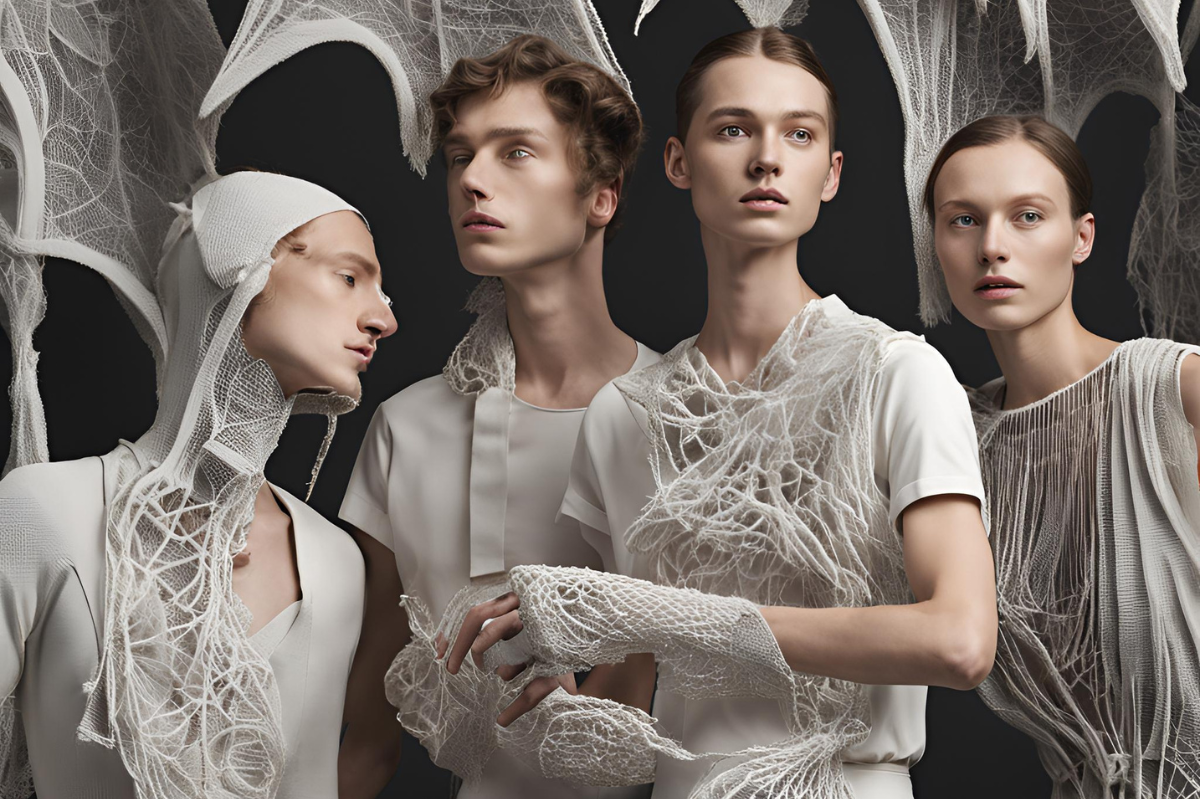
Digitalization as well as the rise of AI bring fresh possibilities and questions to the forefront. Designers are eager to push boundaries and explore this potential, yet without sacrificing the physical aspects of their profession. There is a need for workflows and interfaces that enhance human- computer interaction, enabling workflows that seamlessly integrate manual techniques with technological advancements.
Old and new methods don’t have to compete; instead, they can challenge and enrich each other, leading to a more holistic and dynamic approach to fashion.
Experimental crafts beyond horizons
Real-life knowledge is essential for building something digitally. Understanding how something is built in the physical world is key to achieving authenticity in the digital space. Creating digital fashion challenges us to translate our traditional craftsmanship into a new digital language, enabling us to recreate what we wear in the physical world and to take it further into a realm where gravity or shortage of materials are not limitations.
The exchange of knowledge between physical and digital craftsmanship allows us to enhance our skills in both areas. This creates a dynamic interplay that widens our horizon, enriches our understanding and capabilities.
Venturing into the digital realm can feel overwhelming, as it requires new knowledge and opens up a vast and expansive world. Fashion builds upon a rich heritage which, when put into a different context, can raise relevant questions and provide new perspectives. Our physical skills can serve as guiding rails as we search for novel ways to express our ideas and explore identities.
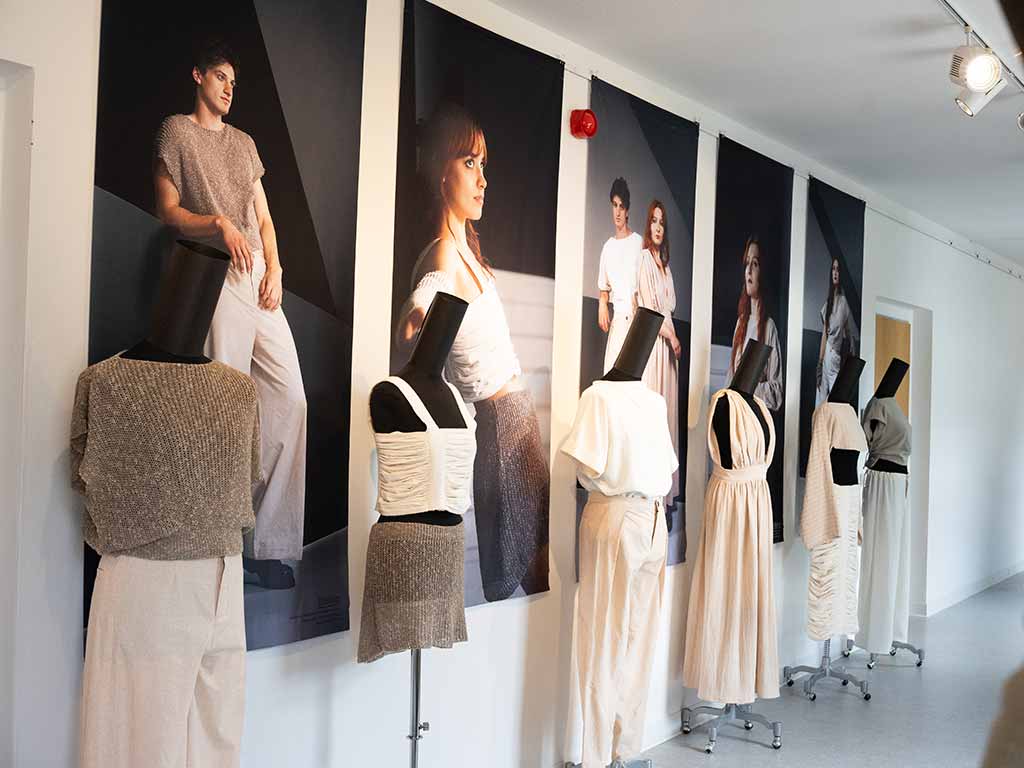
Check out the concept of our makerspace and see on which technologies our students will work on.