Makerspace 2026 – New Impulses from Riga
The FashionTEX Makerspace is entering its second year: Following its successful premiere last year in Schneeberg, it will take place in Riga from August 31 to September 12, 2026. Selected students from the fashion schools participating in the FashionTEX program will convene at the Latvian Academy of Arts. The focus will be on the connection between digital and physical fashion design and the question of how fashion will be conceived, developed, and produced in the future. The Makerspace combines creative visions with technological innovation: During the residency, interdisciplinary workshops will foster new approaches to fashion, bridging digital design and handcrafted execution. Participants can expect an intensive in-person phase in Riga, where they will work with experts, utilize modern tools, and develop their own projects.
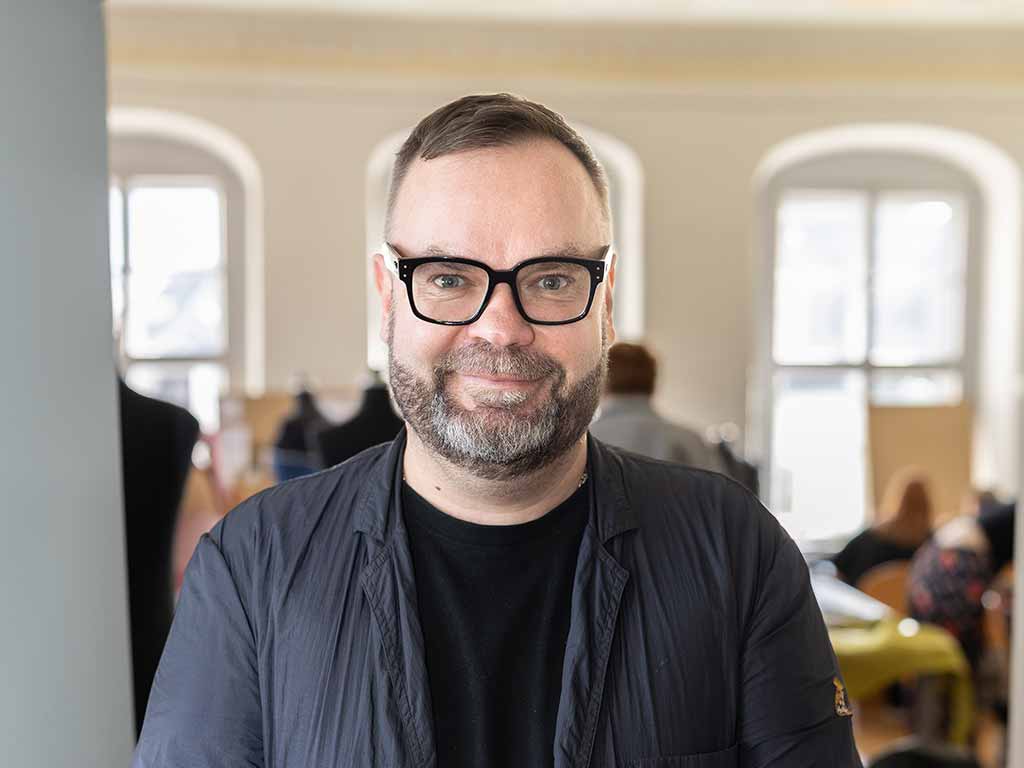
… We spoke with Janis Gailitis, Head of Development and Communication at the Art Academy of Latvia and Project Manager of the FashionTEX Makerspace in Riga, about what students can expect here:
Mr. Gailitis, the FashionTEX Makerspace 2026 in Riga brings together fashion, technology, and international collaboration. What exactly can participants expect?
The FashionTEX Makerspace 2026 combines creative visions with technological innovation. During a two-week residency from August 31 to September 12 in Riga, participants develop new approaches to digital and physical fashion design in interdisciplinary workshops. The unique aspect is the combination of preparation and an intensive practical phase: There is an online learning phase beforehand, laying the foundations. In Riga itself, participants then work very hands-on with experts, using modern tools and, above all, in direct exchange with other young designers from all over Europe.
How is the Makerspace structured in concrete terms?
Mr. Gailitis, the Makerspace follows a simple principle: make it real, make it digital, make it both. The program is divided into clearly structured phases: modules, workshops, and collaborations with external experts. Digital design and physical implementation run in parallel and influence each other.
The Makerspace itself is the central hub: here, precision machines, material knowledge, and real-world production take center stage. It’s the moment when ideas become concrete.
What do the students work on during these two weeks?
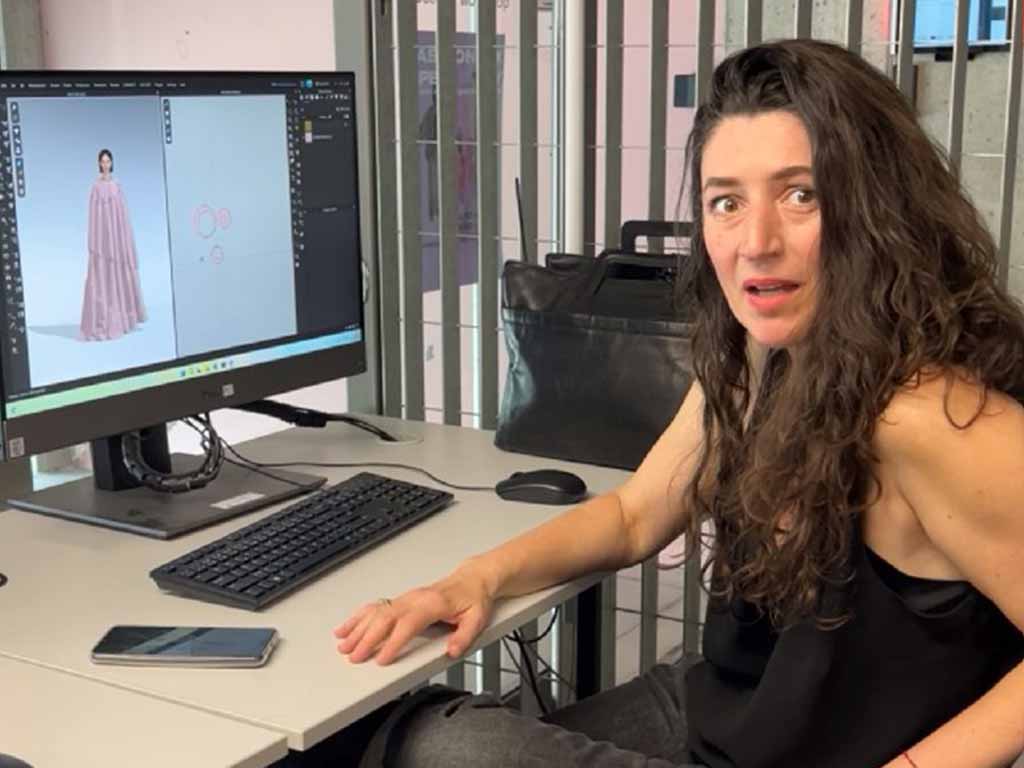
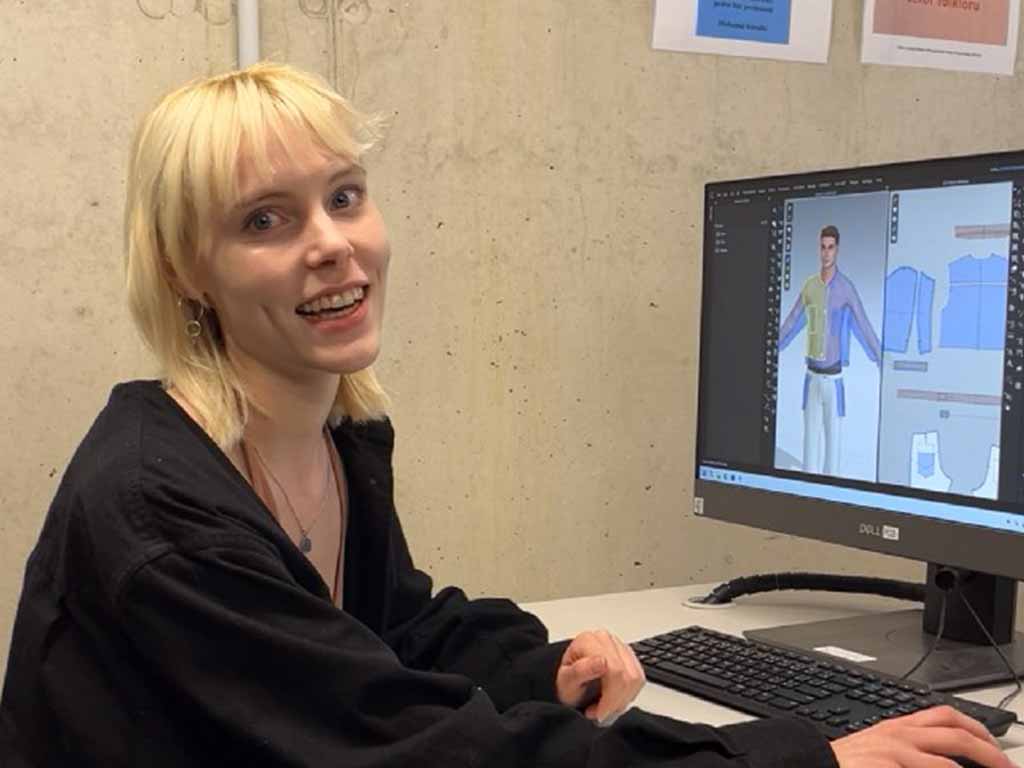
Mr. Gailitis, each participant develops their own fashion project from scratch. The process begins digitally: with animations, textures, and concept development in CLO3D. This is followed by physical implementation, for example, through laser cutting, 3D printing, embroidery, or digital knitting. The result is a finished, wearable garment. The important thing is: the path always leads from the digital to the physical – and back again.
Which technologies and topics are the focus?
Mr. Gailitis, digital fashion is clearly the focus. The goal is to understand how technology is changing the way clothing is designed, produced, and communicated.
Participants work with CLO3D for simulation and visualization, as well as with technologies such as 3D printing, laser cutting, and digital knitting. You could say that code and fabric intertwine at every stage.
How does the collaboration between the students work?
Mr. Gailitis, very intensively. We have 24 participants from 11 countries, and collaboration isn’t just a part of the program; it is the program itself.
The groups participate in workshops together, pooling their skills, contributing diverse perspectives, and advancing their ideas from digital design to physical realization. The diversity of the participants is central; it gives the projects their unique quality.
What can the participants take away at the end?
Mr. Gailitis, at the end of the two weeks, there is a fully realized project: a finished garment and a digitally documented 3D model.
In addition, there’s a professional presentation with fittings, photography, and documentation—a result that can be used directly for a portfolio or future projects. A highlight is the digital 360° show at the FashionTEX Festival in October, which will showcase all the work.
The Makerspace builds on the experiences gained from Schneeberg 2025. What has been further developed?
Mr. Gailitis, Schneeberg demonstrated that the concept works. In Riga, we refined it further with clearer processes, better preparation, and more time for practical implementation. We learned a great deal, especially about the importance of structure in truly unleashing creativity.
What role do creativity and digital skills play in the selection process?
Mr. Gailitis, a central one. The Makerspace is intensive and demanding.
Participants must not only be creative, but also digitally savvy and open to collaboration across disciplines and cultures. Those who impress here are curious, communicative, and ready to develop something new together.
How can students apply?
Mr. Gailitis, applications are submitted through FashionTEX’s partner universities, not directly through the Makerspace in Riga. These partner universities include the Amsterdam Fashion Academy, the art academies in Riga, Tallinn, and Vilnius, the University of Zagreb, the West Saxon University of Applied Sciences Zwickau, and the Koefia Academy in Rome.
What makes Riga a special location?
Mr. Gailitis, Riga surprises many. The city has a strong creative scene, a long cultural tradition, and at the same time, a very open and dynamic atmosphere.
The Makerspace is located directly at the Latvian Academy of Fine Arts and is therefore closely connected to this environment. Many participants end up taking away just as much inspiration from the city as from their work in the program.