Digital knitting machine and copper accessories: Young fashion designers from across Europe meet in Riga.
Autorin: Alise Zālīte (LTV-Journalistin)
“FashionTEX” is an international project offering young designers the opportunity to acquire skills in the field of digital fashion. The project aims to prepare the next generation of fashion designers for the future and support them in creatively and innovatively shaping the industry’s future. Last year, the project’s first residency took place in Germany; this year, the young designers are expanding their knowledge and skills in Riga.
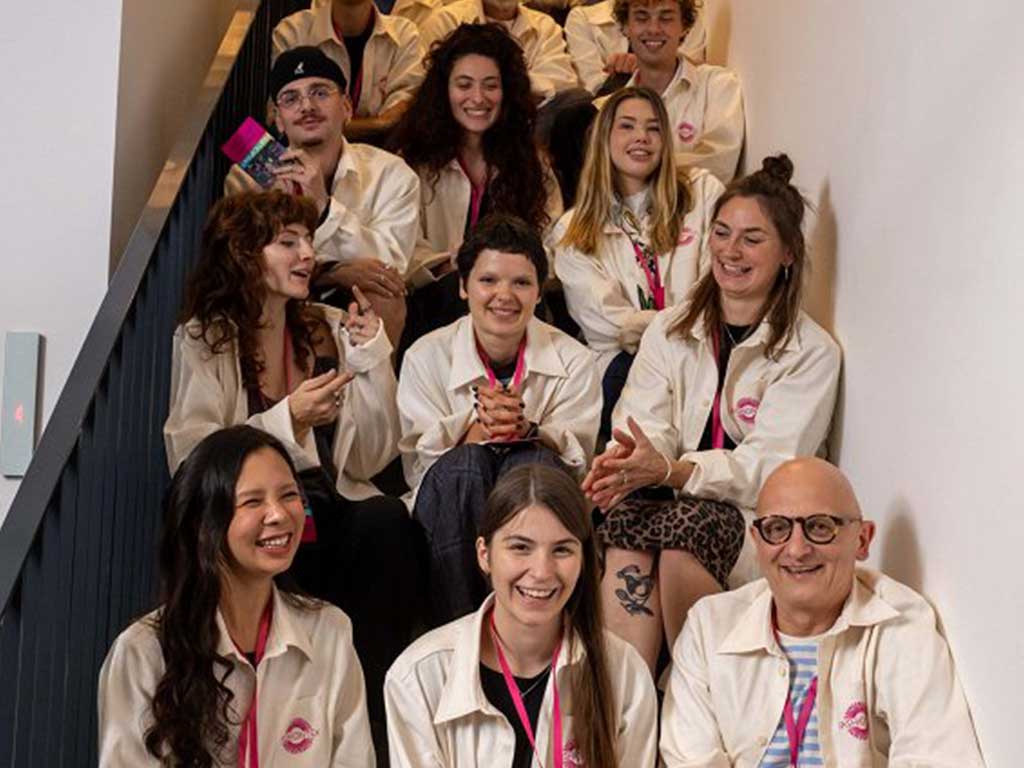
The international “FashionTEX” residency is taking place over two weeks at the “Riga Makerspace” prototyping workshop, part of the Art Academy of Latvia (LMA). It brings together young fashion designers from 11 European fashion schools.
“Our goal is to introduce students to new technologies and the possibilities they offer. With the support of our experts, students get to know a wide range of equipment, technologies, and materials, learning how they can be applied specifically within the fashion sector. The foundation for this is the software CLO3D, which is considered the industry standard.
Another focus is on technical capabilities—this involves not only sewing machines but also digital knitting machines, digital weaving looms, laser cutters, 3D scanners, 3D printers, and CNC milling machines.
At the same time, we are trying to expand the spectrum of materials used; beyond textiles, we also work with metal and copper accessories, for example,” explains Jānis Gailītis, Head of the Development and Communication Department at the Art Academy of Latvia.
The students not only deepen their traditional fashion design skills but also engage with digital solutions and new technologies. This approach also aims to foster the development of a more sustainable fashion industry. “Here, we are working with metal—specifically copper—which is intended to become part of my dress. The concept for the dress draws inspiration from a dimension where time and space are neither limiting nor defining factors. I originally designed the dress in a digital environment, and now I am working on bringing it into physical reality.
Throughout this process, I watch my ideas gradually become real and take on physical form. In my view, this represents a significant step toward the future of fashion.
Working with technologies like these is fascinating, as not all students have access to such opportunities at their own universities.
Collaborating with fellow students is also incredibly valuable, since each of us brings unique experiences, knowledge, skills, and perspectives on the world,” emphasizes Giulia Camolese, a young fashion designer from Italy.
During the creative residency, each student is tasked with developing a complete outfit in both physical and digital versions.
“The students’ designs are remarkably diverse, reflecting their individual styles. They come from various countries, bringing with them a wide range of tastes and perspectives.
The final results will stem from a vast array of inspirations.
It really covers the whole spectrum—from the underwater world and the cold atmosphere of a Nordic winter to futuristic moods and earthy tones,” explains Indra Miklāva, Head of the Fashion Design Department at the Art Academy of Latvia.
The work of these young fashion designers will be showcased at the FashionTEX Digital Fashion Festival on October 1st.