The Future of Fashion Isn’t Created on a Computer Alone – An Interview with Uwe Bodenschatz
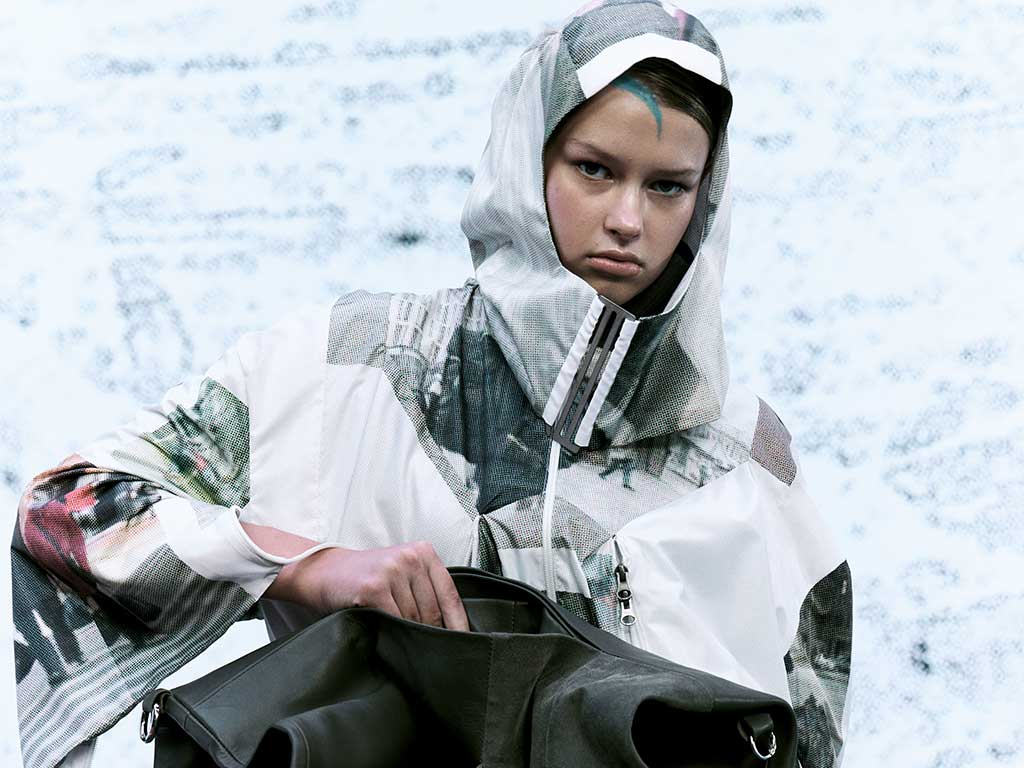
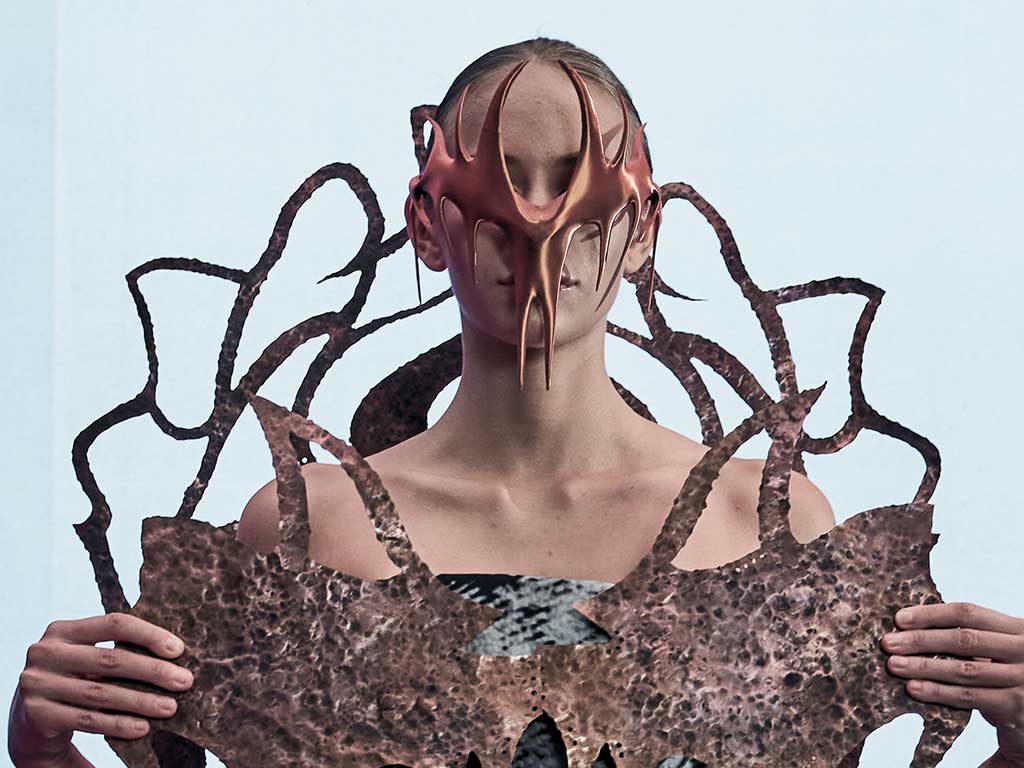
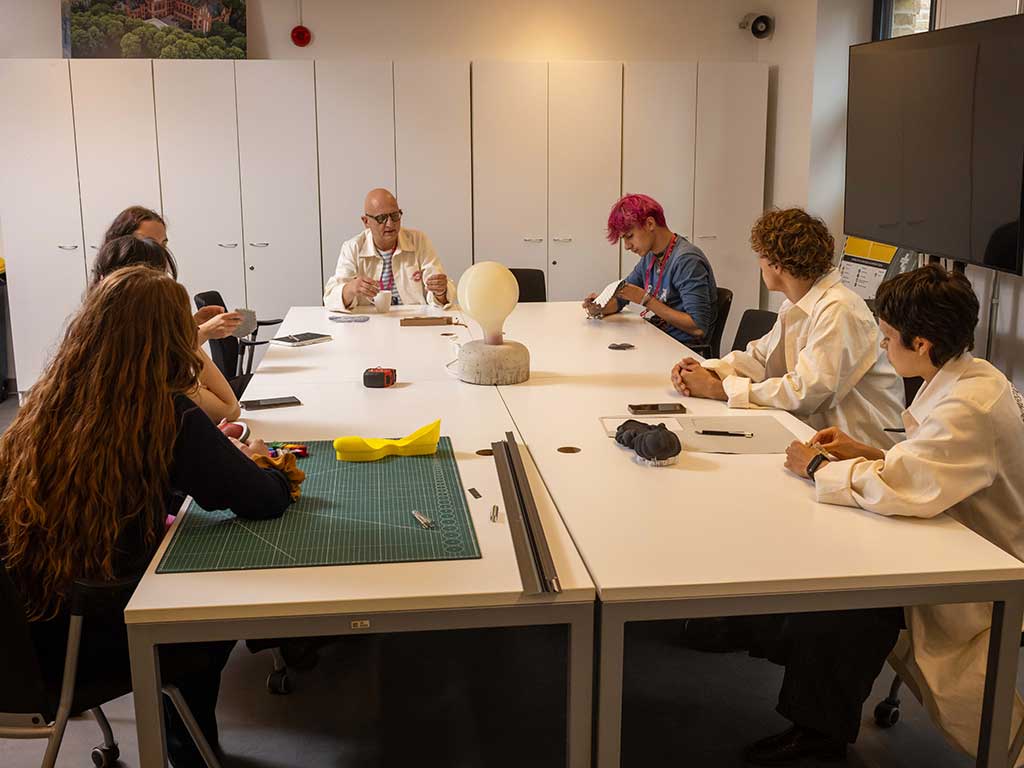
3D printers instead of sewing machines, laser cutters instead of scissors? At the FashionTEX Makerspace 2026 in Riga, designer and materials researcher Uwe Bodenschatz demonstrated how digital technologies are transforming fashion design. For two weeks, students from eleven European universities experimented with 3D scanning, new materials and innovative manufacturing techniques. In this interview, he explains how digital designs become wearable creations, why a failed 3D print can sometimes be the best teacher, and why the future of fashion still depends on traditional craftsmanship.
Uwe, your background is in wood design, and today you work with digital fabrication technologies. How does that connect to fashion?
Uwe Bodenschatz: Very well, actually! I’m interested in how we can bring materials and technologies together in new ways. I find natural and biodegradable materials particularly exciting. Whether it’s wood, textiles or new materials, ultimately it’s always about turning an idea into something tangible. That’s exactly what we explored in Riga, using 3D scanners, 3D printers and laser cutters.
At the FashionTEX Makerspace, digital designs were supposed to become physical objects within just a few days. How does that work?
Uwe Bodenschatz: First, you need to understand how the different technologies work together. With a 3D scanner, we can digitally capture existing objects. These models can then be modified and produced using a 3D printer. A laser cutter, meanwhile, allows us to create precise shapes and components.
It was important to me that students didn’t simply learn how to operate machines, but also understood the processes behind them. Only then can they make informed decisions about which technology best suits their ideas.
Was there a moment when you were surprised by what the students had created?
Uwe Bodenschatz: Absolutely. Some students had never worked with 3D modelling before, yet they managed to develop their own printable models in a remarkably short time. That was impressive.
I was particularly fascinated by a project in which we developed a new technique together to attach scale-like elements to fabric using a combination of laser cutting and 3D printing. Experiments like these demonstrate how digital fabrication can open up entirely new creative possibilities for fashion.
Other students arrived with ideas for which they had previously been unable to find suitable manufacturing methods. These included self-developed inflatable elements for garments.
That sounds like limitless possibilities. Where does technology reach its limits?
Uwe Bodenschatz: A digital model is far from being a functioning product. Something that looks perfect on screen can behave very differently in reality. A component might be too thin, a material might not be strong enough, or a particular shape might simply be impossible to produce with the available equipment.
That’s when you have to rethink your approach. And that’s exactly what makes it exciting: the original idea has to be adapted to the possibilities of the material and the manufacturing process. Often, the design becomes even better as a result.
What happens when a 3D print fails or the laser cutter doesn’t produce the desired result?
Uwe Bodenschatz: Then you may have just learned something important! You can’t understand digital fabrication by looking only at successful results. A 3D print that breaks or fails during production can teach us something valuable about the material or the manufacturing process.
Mistakes are part of the design process. Anyone who experiments must be willing to try things that might not work the first time.
Young designers from eleven European universities worked together in Riga. How did you experience this exchange?
Uwe Bodenschatz: It was wonderful to see how naturally the students supported one another. Everyone brought different skills and experiences. Someone with expertise in 3D modelling, for example, could share that knowledge and, in return, learn something about metalworking.
This kind of collaboration is incredibly valuable. A strong fashion design often requires knowledge from many different fields. When people with different perspectives work together on a solution, possibilities emerge that one person might never have discovered alone.
How much will 3D printing and digital fabrication change the fashion industry in the future?
Uwe Bodenschatz: I see enormous potential in combining digital fabrication with materials research. I’m particularly interested in bio-based materials, alternative materials and new ways of creating customised products.
Improved 3D scanners, more accessible manufacturing technologies and new printing materials could make entirely new shapes and structures possible. At the same time, greater customisation could help make products more durable and sustainable.
Does digital automatically mean more sustainable?
Uwe Bodenschatz: No, not at all. Sustainability has to begin with the choice of materials and manufacturing processes. Just because something is produced using a 3D printer doesn’t automatically make it environmentally friendly.
We need to ask ourselves: How many resources are being used? How durable is the product? And what happens to it when it is no longer needed?
Digital technologies can help avoid unnecessary production or enable the use of alternative materials. But technology should never be an end in itself.
Will fashion designers still need traditional craftsmanship in the future?
Uwe Bodenschatz: Absolutely! If you don’t understand materials, even the best technology won’t help you create truly good products. Craftsmanship gives you a feel for material properties, construction and limitations.
Digital technologies open up new possibilities. But things become really interesting when you combine both worlds: traditional craftsmanship and digital fabrication.
What makes the FashionTEX Makerspace so special to you?
Uwe Bodenschatz: Above all, its intensity. Two weeks is an incredibly short time to develop, test and realise so many different ideas. But that time constraint creates a very special dynamic.
Students can immediately experience how a design decision translates into a physical result. They work with unfamiliar machines, try out different processes and support one another.
I’m amazed by how many prototypes were created in such a short time. When digital fabrication, materials research and fashion design come together, an enormous amount of creative energy is generated.
When do you consider a digital fashion project truly successful?
Uwe Bodenschatz: When technology is not merely a decorative addition but an essential part of the design. I’m interested in how materials, manufacturing methods and creative concepts work together.
A good project isn’t defined by how many technologies are used. What matters is whether the chosen technology genuinely supports the idea.
What advice would you give young designers who want to work with new technologies?
Uwe Bodenschatz: Always start with your idea and then look for the manufacturing process that best suits it. Learn how the tools work, but pay just as much attention to the materials.
Don’t automatically assume that a digital solution is better than a traditional one. The most exciting results often come from understanding both worlds and knowing how to combine them effectively.
And if you had to describe the FashionTEX Makerspace in Riga in three words?
Uwe Bodenschatz: Material. Making. Magic.
Uwe Bodenschatz is a designer and researcher specialising in digital fabrication and sustainable materials. With a background in wood design, he focuses particularly on natural and biodegradable materials as well as innovative manufacturing processes. At the FashionTEX Makerspace 2026 in Riga, he mentored students from eleven European universities, working with 3D scanning, 3D printing and laser cutting technologies.